

Course description
Cinematography + AI is a one-year full-time program for those who want to create cinematic imagery in a modern production environment—combining classic cinematography skills with AI, post-production, and generative video. The program covers working with the camera, lighting, framing, movement, and color, as well as preparing footage for a modern production pipeline, where film footage is increasingly combined with AI tools, compositing, and image generation. This is not a traditional cinematography program. It is about learning to consciously construct the visual image within both real-world and hybrid production models. .
Cinematography + AI
Cinematography + AI is a modern program at AMA Kraków that teaches cinematic image creation using a complete contemporary workflow—from camera, lighting, and movement to post-production, AI, and generative video.
2026 tuition fee (first edition): PLN 7,900 per semester
Standard tuition fee: PLN 8,900
Limited availability—only 10 places.
In addition,
A masterful, release-ready project
We have prepared special terms for those committed to pursuing their education at AMA. Candidates who pass the admissions process and sign a student contract by the end of June 2026 will receive a 30% discount on their final semester—as support during the final stage of their education.
Duration
1 year, 2 semesters. One semester consists of 8 sessions held every 2 weeks. Classes are held on Saturdays and Sundays from 10:00 a.m. to 6:00 p.m.
Start your education in this course



About the Program
The Cinematography + AI program at AMA Kraków teaches students how to consciously create a cinematic image in a world where the film set is no longer the end of a cinematographer’s workflow. Today, the image is created simultaneously on set, in post-production, and, increasingly, in an AI environment. That is why this program combines classic cinematography skills with a modern visual workflow.
The program covers working with the camera, optics, lighting, movement, composition, and color, as well as preparing footage for further processing, thinking about hybrid imagery, and the basics of working with generative video. The goal is not only to teach students how to film well, but also to teach them how to design an image that works throughout the entire production process.
Who is it for?
This program is for people who:
- want to grow as an operator within a modern production model,
- are interested in the camera, lighting, movement, and the visual aspects of film,
- want to understand the relationship between the film set, post-production, and AI,
- want to work on films, commercials, short films, and contemporary visual media,
- They want to create an image not only technically, but also thoughtfully and creatively.
This is a natural next step after Visual Storytelling —or for those who already have the basics and want to advance to the level of modern cinematography specialization.
What You’ll Learn
During the course, you’ll learn, among other things:
- deliberate development of framing, composition, and visual language,
- working with the camera, optics, and movement,
- lighting design for emotion, scene, and narrative,
- working with color and preparing the image for post-production,
- collaboration with the director, the editing team, and the post-production team,
- thinking of the image as part of the entire production pipeline,
- the use of AI for previz, visual testing, cleanup, and content development,
- the basics of working with hybrid images and generative video.
AI and Generative Video
In the AMA Operatorski + AI course, AI is not an add-on but an integral part of the modern visual artist’s toolkit. Students learn to understand how footage can be further developed, modified, and integrated with generative tools. The program demonstrates how to design shots with post-production, compositing, and AI environments in mind, in order to maintain visual consistency and full control over the final result.
Learning Outcome
Upon completing the program, students will be able to consciously create cinematic imagery, work with cameras, lighting, and color, and understand the contemporary filmmaking process—from the film set to post-production, AI, and generative video. This program is for those who want to become next-generation cinematographers.
FAQ — Cinematography + AI, Kraków (on-site)
How does the “Cinematography + AI” course differ from a traditional cinematography course?
A traditional cinematography program ends on the set. The Cinematography + AI program at AMA teaches students how to work with imagery throughout the entire modern workflow: camera, lighting, and movement are the foundation, but the program also covers color grading, preparing footage for post-production, working with AI, and creating hybrid imagery. A new-generation cinematographer understands the entire pipeline, not just their own part of it.
Do I need to have previous experience as a camera operator?
It is not required. A natural starting point is Visual Storytelling—if you already have a basic understanding of working with cameras and imagery, you can start directly with Cinematography + AI. In any case, the program begins with a solid foundation and builds on it to develop specialization.
What role does AI play in the operator program?
AI is part of a modern cinematographer’s toolkit, not a separate module. In this program, you’ll learn to create mood boards and previs, produce hybrid imagery by combining on-set footage with generative video, use AI for cleanup and set extensions, and design shots with post-production in mind. You’ll learn to control the image—not leave it up to an algorithm.
What does working with color involve in this field?
Color grading is a separate area of the program: you’ll learn about color correction, developing a visual style, and preparing footage for the post-production pipeline. A cinematographer who understands color during both shooting and post-production has a real advantage in the market.
What kind of career opportunities are available to me after completing the Camera Cinematography + AI program?
Graduates can pursue careers as camera operators in film, advertising, and television series; as directors of photography on smaller productions; as hybrid camera operators combining on-set footage with AI; or as collaborators on post-production projects that require an understanding of the filming process.
How many projects am I working on while I’m in school?
The program includes a black-and-white cinematography short film, a color short film, and a graduation film presented publicly before a committee. Each project is a complete cycle—from the visual concept, through on-set production, to post-production and presentation. Graduates receive a diploma from the AMA Film Academy.
How does “Operatorski + AI” differ from “Directing-Cinematography”?
Cinematography + AI focuses on the visual aspect and the role of the cinematographer. Directing-Cinematography is an English-language, dual-specialization program that combines directing and cinematography into a single curriculum—for those who want to lead a project while also being responsible for its visual style. Cinematography + AI is the right choice for those who want to pursue a career as a DOP.
Degree in Cinematography + AI
To complete the course and earn a diploma, students must submit a graduation film, which is screened for an audience during an open exam, and pass a theoretical exam. Students who pass receive an AMA FILM ACADEMY Diploma.
A program supported by the Polish Film Institute
Related courses
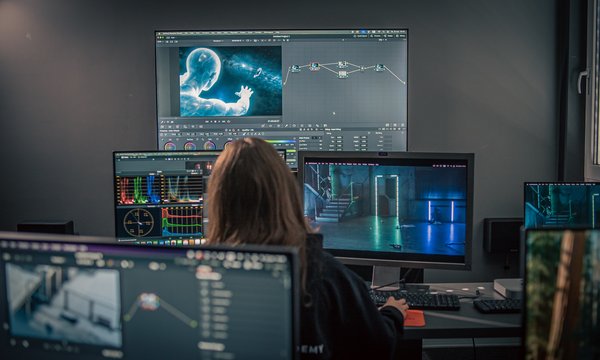
Image Post-Production + AI
A course on compositing, visual effects, AI, and the final film image.

Film Directing + AI
A program focusing on cinematography, working with a crew, and modern production processes.

Cinematography + AI
A program focusing on cinematography, camera work, lighting, and contemporary camera operator workflows.
Course curriculum
Registration Guide
Registration begins on: April 15 , 2026
Recruitment begins on: May 5 , 2026
Course start date: October 13, 2026; end date: June 30, 2027
Exam fee: 250 PLN
Accident Insurance: 70 PLN
Entry fee: 1,900 PLN
Tuition: 7,900 PLN per semester / 15,800 PLN per year
Payable per semester in advance by October 1 and February 15 of each year
or in monthly installments due by the 5th of each month:
October – June: 1,600 PLN
July–September: 1,000 PLN
» We have prepared special terms for those who are committed to growing their careers at AMA.
Candidates who are accepted and sign a student contract by the end of June 2026 will receive a 30% discount on their final semester—as support during the final stage of their education.
The course will cover the following practical topics:
- p]:pt-0 [&>p]:mb-2 [&>p]:my-0″>
Individual work with the camera and camerawork exercises
- p]:pt-0 [&>p]:mb-2 [&>p]:my-0″>
Camera menu settings, RAW and LOG technology
- p]:pt-0 [&>p]:mb-2 [&>p]:my-0″>
Lens tests and style tests
- p]:pt-0 [&>p]:mb-2 [&>p]:my-0″>
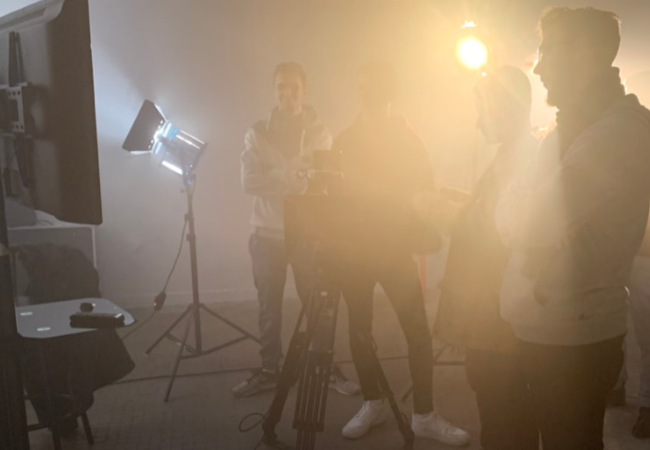
Lighting workshops for cinematographers (studio, location, interiors)
- p]:pt-0 [&>p]:mb-2 [&>p]:my-0″>
Swing drills and grip work
- p]:pt-0 [&>p]:mb-2 [&>p]:my-0″>
camera movements: tracking shot, crane shot, dolly shot, Steadicam, stabilizers
- p]:pt-0 [&>p]:mb-2 [&>p]:my-0″>
Practical workshops on staging
- p]:pt-0 [&>p]:mb-2 [&>p]:my-0″>
collaboration with the director
- p]:pt-0 [&>p]:mb-2 [&>p]:my-0″>
mood shots: night, rain, fog
- p]:pt-0 [&>p]:mb-2 [&>p]:my-0″>
photos of moving vehicles, small cameras, mounts
- p]:pt-0 [&>p]:mb-2 [&>p]:my-0″>
color correction and color grading
- p]:pt-0 [&>p]:mb-2 [&>p]:my-0″>
Generative mood boards and previs (AI)
- p]:pt-0 [&>p]:mb-2 [&>p]:my-0″>
generative video (text-to-video, image-to-video)
- p]:pt-0 [&>p]:mb-2 [&>p]:my-0″>
creating a hybrid image (photo + AI)
- p]:pt-0 [&>p]:mb-2 [&>p]:my-0″>
On-set VFX and green screen
- p]:pt-0 [&>p]:mb-2 [&>p]:my-0″>
AI-assisted VFX: cleanup, compositing, set extension
- p]:pt-0 [&>p]:mb-2 [&>p]:my-0″>
Production of a black-and-white cinematography study
- p]:pt-0 [&>p]:mb-2 [&>p]:my-0″>
Production of a color cinematography study
- p]:pt-0 [&>p]:mb-2 [&>p]:my-0″>
Production of a graduation film
- p]:pt-0 [&>p]:mb-2 [&>p]:my-0″>
screenings, discussions, master classes
Theory
The course will cover the following theoretical topics:
- p]:pt-0 [&>p]:mb-2 [&>p]:my-0″>
The Basics of Film Language — Telling a Story Through Images
- p]:pt-0 [&>p]:mb-2 [&>p]:my-0″>
Principles of Composition and Cinematography
- p]:pt-0 [&>p]:mb-2 [&>p]:my-0″>
The Theory of Film Lighting and Lighting Techniques
- p]:pt-0 [&>p]:mb-2 [&>p]:my-0″>
cinematography and camerawork
- p]:pt-0 [&>p]:mb-2 [&>p]:my-0″>
Issues in Film Exposure and Contrast
- p]:pt-0 [&>p]:mb-2 [&>p]:my-0″>
color theory and the visual concept of the film
- p]:pt-0 [&>p]:mb-2 [&>p]:my-0″>
Film Analysis and Recognition of Cinematographic Style
- p]:pt-0 [&>p]:mb-2 [&>p]:my-0″>
The Aesthetics and Poetics of the Film Image
- p]:pt-0 [&>p]:mb-2 [&>p]:my-0″>
cinematography post-production and preparation for the pipeline
- p]:pt-0 [&>p]:mb-2 [&>p]:my-0″>
The Role of AI in Film Production
- p]:pt-0 [&>p]:mb-2 [&>p]:my-0″>
Ethics and Copyright of Generative Content
- p]:pt-0 [&>p]:mb-2 [&>p]:my-0″>
hybrid visual production workflow
Faculty Members of the Program
- Piotr Lenar
- Jarosław Żamojda
- Adam Bajerski
- Paweł Labe
- Patryk Jordanowicz
- Anna Giemzik
- Przemysław Mastela
- Paweł Skotarski
- Adam Kulesza
- Piotr Zdybał
- Maciej Gil
Admission Requirements
To be admitted to the Cinematography + AI program, you must participate in an interview and, optionally, submit your portfolio.
We schedule interview dates with participants on an individual basis.
Please send your resume and portfolio to the following email address: rekrutacja@amafilmacademy.pl
» We’ve prepared special terms for those committed to pursuing their education at AMA.
Candidates who pass the admissions process and sign a student contract by the end of June 2026 will receive a 30% discount on their final semester—as support during the final stage of their education.
Registration Guide
Registration begins on: April 15 , 2026
Recruitment begins on: May 5 , 2026
Course start date: October 13, 2026; end date: June 30, 2027
Exam fee: 250 PLN
Accident Insurance: 70 PLN
Entry fee: 1,900 PLN
Tuition: 7,900 PLN per semester / 15,800 PLN per year
Payable per semester in advance by October 1 and February 15 of each year
or in monthly installments due by the 5th of each month:
October – June: 1,600 PLN
July–September: 1,000 PLN
» We have prepared special terms for those who are committed to growing their careers at AMA.
Candidates who are accepted and sign a student contract by the end of June 2026 will receive a 30% discount on their final semester—as support during the final stage of their education.
The course will cover the following practical topics:
- p]:pt-0 [&>p]:mb-2 [&>p]:my-0″>
Individual work with the camera and camerawork exercises
- p]:pt-0 [&>p]:mb-2 [&>p]:my-0″>
Camera menu settings, RAW and LOG technology
- p]:pt-0 [&>p]:mb-2 [&>p]:my-0″>
Lens tests and style tests
- p]:pt-0 [&>p]:mb-2 [&>p]:my-0″>
Lighting workshops for cinematographers (studio, location, interiors)
- p]:pt-0 [&>p]:mb-2 [&>p]:my-0″>
Swing drills and grip work
- p]:pt-0 [&>p]:mb-2 [&>p]:my-0″>
camera movements: tracking shot, crane shot, dolly shot, Steadicam, stabilizers
- p]:pt-0 [&>p]:mb-2 [&>p]:my-0″>
Practical workshops on staging
- p]:pt-0 [&>p]:mb-2 [&>p]:my-0″>
collaboration with the director
- p]:pt-0 [&>p]:mb-2 [&>p]:my-0″>
mood shots: night, rain, fog
- p]:pt-0 [&>p]:mb-2 [&>p]:my-0″>
photos of moving vehicles, small cameras, mounts
- p]:pt-0 [&>p]:mb-2 [&>p]:my-0″>
color correction and color grading
- p]:pt-0 [&>p]:mb-2 [&>p]:my-0″>
Generative mood boards and previs (AI)
- p]:pt-0 [&>p]:mb-2 [&>p]:my-0″>
generative video (text-to-video, image-to-video)
- p]:pt-0 [&>p]:mb-2 [&>p]:my-0″>
creating a hybrid image (photo + AI)
- p]:pt-0 [&>p]:mb-2 [&>p]:my-0″>
On-set VFX and green screen
- p]:pt-0 [&>p]:mb-2 [&>p]:my-0″>
AI-assisted VFX: cleanup, compositing, set extension
- p]:pt-0 [&>p]:mb-2 [&>p]:my-0″>
Production of a black-and-white cinematography study
- p]:pt-0 [&>p]:mb-2 [&>p]:my-0″>
Production of a color cinematography study
- p]:pt-0 [&>p]:mb-2 [&>p]:my-0″>
Production of a graduation film
- p]:pt-0 [&>p]:mb-2 [&>p]:my-0″>
screenings, discussions, master classes
Theory
The course will cover the following theoretical topics:
- p]:pt-0 [&>p]:mb-2 [&>p]:my-0″>
The Basics of Film Language — Telling a Story Through Images
- p]:pt-0 [&>p]:mb-2 [&>p]:my-0″>
Principles of Composition and Cinematography
- p]:pt-0 [&>p]:mb-2 [&>p]:my-0″>
The Theory of Film Lighting and Lighting Techniques
- p]:pt-0 [&>p]:mb-2 [&>p]:my-0″>
cinematography and camerawork
- p]:pt-0 [&>p]:mb-2 [&>p]:my-0″>
Issues in Film Exposure and Contrast
- p]:pt-0 [&>p]:mb-2 [&>p]:my-0″>
color theory and the visual concept of the film
- p]:pt-0 [&>p]:mb-2 [&>p]:my-0″>
Film Analysis and Recognition of Cinematographic Style
- p]:pt-0 [&>p]:mb-2 [&>p]:my-0″>
The Aesthetics and Poetics of the Film Image
- p]:pt-0 [&>p]:mb-2 [&>p]:my-0″>
cinematography post-production and preparation for the pipeline
- p]:pt-0 [&>p]:mb-2 [&>p]:my-0″>
The Role of AI in Film Production
- p]:pt-0 [&>p]:mb-2 [&>p]:my-0″>
Ethics and Copyright of Generative Content
- p]:pt-0 [&>p]:mb-2 [&>p]:my-0″>
hybrid visual production workflow
Faculty Members of the Program
- Piotr Lenar
- Jarosław Żamojda
- Adam Bajerski
- Paweł Labe
- Patryk Jordanowicz
- Anna Giemzik
- Przemysław Mastela
- Paweł Skotarski
- Adam Kulesza
- Piotr Zdybał
- Maciej Gil
Admission Requirements
To be admitted to the Cinematography + AI program, you must participate in an interview and, optionally, submit your portfolio.
We schedule interview dates with participants on an individual basis.
Please send your resume and portfolio to the following email address: rekrutacja@amafilmacademy.pl
» We’ve prepared special terms for those committed to pursuing their education at AMA.
Candidates who pass the admissions process and sign a student contract by the end of June 2026 will receive a 30% discount on their final semester—as support during the final stage of their education.

Learn with us. Explore the world of film!
Get inspired by film and learn from the best. Gain a modern profession and work professionally in the film industry. Check the current enrolment.
Enrol at AMA