

Course description
The Sound Production program at AMA Warsaw is a one-year part-time program for people who want to work with sound in film, advertising, video games, and multimedia. The program covers the entire audio production process: on-set recording, dialogue editing, Foley, ADR, sound design, post-production, film music, and preparing material for the final mix.
It’s a practical way to learn how to think in terms of sound, not just how to use the software. You’ll learn to analyze a script, plan a soundtrack, record audio on set, work in Pro Tools, iZotope RX, Soundminer, ElevenLabs, Suno, and DaVinci Resolve, and build the auditory drama of a scene.
Sound Production
A one-of-a-kind program at a film school. It covers the full range of topics related to sound and music production in film, video games, television, advertising, and multimedia. The program is offered at AMA Warsaw.
Space is limited—groups of 10 people.
In addition,
We have prepared special terms for those committed to pursuing their education at AMA. Candidates who pass the admissions process and sign a student contract by the end of June 2026 will receive a 30% discount on their final semester—as support during the final stage of their education.
Duration
1 year, 2 semesters. One semester consists of 8 sessions held every 2 weeks, each lasting 3 days. Classes are held on Fridays from 4:00 p.m. to 8:00 p.m. and on Saturdays and Sundays from 10:00 a.m. to 6:00 p.m.
Start your education in this course

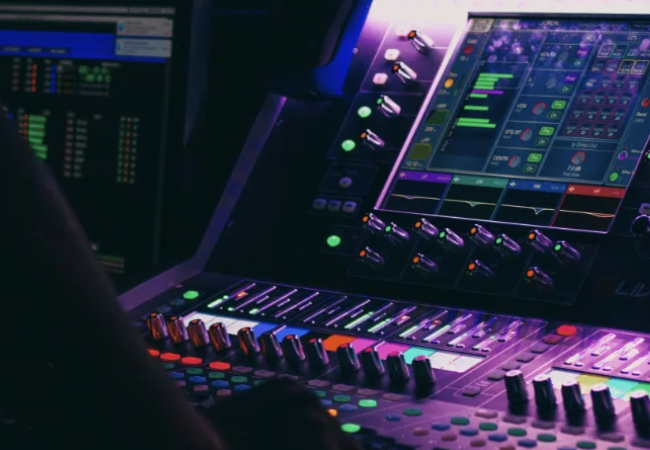
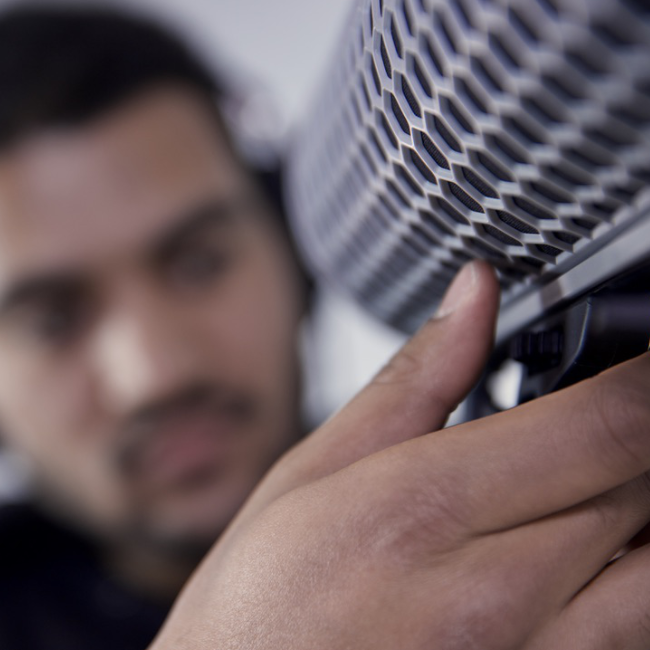
Sound design is one of the most important specializations in audiovisual production. A well-crafted soundtrack enhances the visuals, guides the viewer’s attention, builds tension, fills the space, and influences the emotional impact of a scene. Poor sound, on the other hand, can undermine even a very well-produced visual.
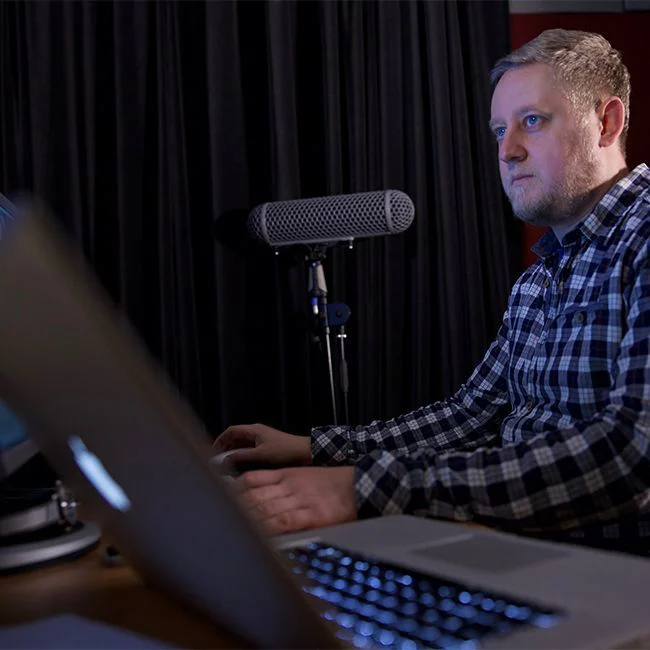
At AMA Warsaw, you’ll learn to treat sound as a language of storytelling. The program covers recording dialogue, ambient sounds, and sound effects on a film set; working with microphones and recorders; organizing the sound stage; the basics of acoustics; dialogue editing; cleaning up recordings; Foley; ADR; sound design; working with music; and preparing material for mixing.
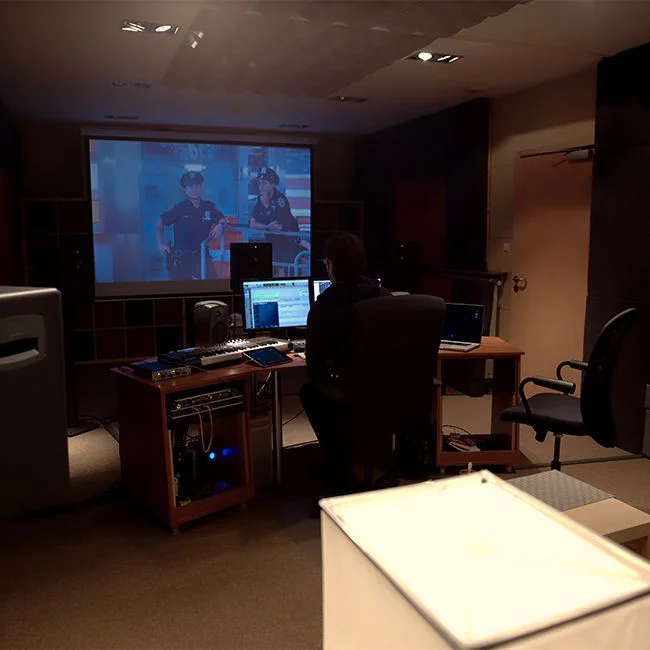
An important part of the program is working with actual film footage. Students learn about the tools used in audio post-production, including Pro Tools and iZotope RX, but the goal of the program is not simply to master the software. The goal is to understand the process: how sound is planned before filming, how it is recorded on set, how the material is organized, how sound layers are built, and how the final soundtrack is prepared for the audience.
The program combines film, advertising, television, games, and multimedia. This allows students to learn both the classical approach to film sound and the basics of working with audio in interactive environments. They learn how to design atmosphere, effects, space, rhythm, and tension, as well as how to collaborate with other key film professionals: the director, cinematographer, editor, composer, and producer.
This program does not require prior musical training. What matters more are attentiveness, a keen ear, an interest in film, and a willingness to engage in intensive practical work. This program is designed for those who want to understand how sound affects the audience and how to consciously create an audio track from the film set to the final mix.
What career paths does this major open up?
After completing this program, you can pursue the following career paths:
On-set sound engineer — a person responsible for recording dialogue, ambient sound, and synchronous sound directly on set. They work with a mixing console, shotgun microphones, lavalier microphones, and wireless systems.
Sound Designer — a professional responsible for creating and building the soundscape in films, TV series, commercials, and video games. They design the sounds of the fictional world: from ambient sounds and special effects to sounds that do not exist in nature.
Sound editor — a specialist in working with audio material after filming is complete: synchronization, dialogue cleanup, ADR editing, sound effects, ambient sounds, and music in the Pro Tools environment.
Foley Artist / Foley Mixer — a person who creates and records synchronized sound effects (footsteps, contact with objects, the rustling of fabric) in a Foley studio — sounds that cannot be captured on set or obtained from a sound library.
Game Audio Designer — a specialist who integrates sound into the interactive game environment, works with middleware (Wwise, FMOD), and understands the specifics of nonlinear audio.
Sound Supervisor’s Assistant — a person who supports the coordination of sound work between the set, editing, the Foley studio, and the final mix. They are responsible for documentation, dialogue lists, organizing ADR sessions, and communicating with the director.
Music Editor / Film Music Supervisor — a specialist in selecting, editing, and synchronizing music for films — from temp tracks through licensing negotiations to preparing the music for the final mix.
The AMA program covers, among other things, analyzing a script from a sound design perspective, working with a director and composer, copyright and music licensing, building your own sound library, and developing a portfolio and career path in the audio industry.
Why is Sound Engineering a career of the future?
The audiovisual production market is growing faster than ever. Streaming platforms, game studios, advertising agencies, podcasts, XR, and immersive formats—in all of these areas, sound is a fundamental component of the experience, not an optional extra. And in all of these areas, there is a shortage of qualified professionals.
Poland’s game development industry is one of the largest in Europe. Game studios in Warsaw and Kraków—from CD Projekt and Techland to dozens of smaller developers—are constantly looking for audio designers who understand the specifics of interactive sound. It’s a growing market that pays well.
Film and advertising sound are areas where the growing availability of hardware and software cannot replace artistic judgment. AI can help clean up recordings and generate ambient effects. But it cannot replace someone who understands why the silence before the gunshot is more important than the gunshot itself—and who knows how to create that silence.
At the same time, immersive formats—Dolby Atmos, spatial audio in VR and AR, and binaural audio—are creating new professional roles that didn’t exist just a few years ago. This is an area where you can build your expertise from scratch today and become an expert in a growing market.
The Sound Production program at AMA Warsaw prepares students for work in this field: through hands-on training using industry tools, under the guidance of professionals active in the film and advertising markets.
FAQ
Do I have to play an instrument to study Sound Engineering? No. Being able to play an instrument is an asset, but not a requirement. What’s more important is an interest in sound and film, and a willingness to work on projects. Musical sensitivity develops as you learn.
How does sound design differ from film music? Audio production covers the entire audio workflow—from on-set recording, through dialogue editing, effects, and sound design, to the final mix. Film music is one component of the soundtrack. In this program, you’ll learn to manage the entire process—including the music and collaboration with the composer.
What software will you learn about in this program? You’ll work with Pro Tools (the industry standard for film audio post-production) and iZotope RX (an advanced tool for audio cleaning and restoration). You’ll also explore sound libraries, sound design plugins, and the basics of audio tools for video games.
Does the part-time program offer enough class hours? Yes—one semester consists of 8 sessions, each lasting 3 days (Friday evening + Saturday + Sunday). That’s a total of over 400 hours of classes throughout the year. The intensity of the sessions is comparable to that of a full-time program, and the breaks between them allow time for independent study and practice.
Can I work in the gaming industry after completing this program? Yes. The program covers sound in games and multimedia as a separate area, including the specifics of nonlinear audio, audio libraries, and approaches to sound design in interactive environments.
Will AI replace sound engineers? AI automates some processes—cleaning up recordings, upscaling audio, and generating ambient sounds. But artistic decisions, understanding dramatic context, and building a soundscape remain the domain of humans. The program teaches students to use new tools—including AI—to support the process, not to replace it.
Where are the classes held? Classes are held at AMA Warsaw (76 Jagiellońska St.). As part of the program, students also visit professional recording studios in Warsaw, including a dubbing studio.
Degree in Sound Production
To graduate from the program and receive a degree, students must complete a comprehensive sound production project for their graduation film in the Directing program and pass the final exam.
Students who meet the requirements for completion receive an AMA Film Academy Diploma.
During the course, participants have access to sound editing stations, professional software, and complete sound recording kits for use on set. They also work in sound studios located on the school campuses in Kraków and Warsaw.

Related courses

Film Directing
A program for those who want to develop their skills in directing, working with actors, and the language of film.
Cinematography
A two-year program focusing on the camera, lighting, composition, and the cinematographer's role on set.
Image Post-Production
A program focusing on visual effects, CGI, 3D, compositing, and color grading.
Course curriculum
Registration Guide
Registration begins on: April 15 , 2026
Recruitment begins on: May 5 , 2026
Course start date: October 3, 2026; end date: June 20, 2027
Exam fee: 250 PLN
Accident Insurance: 70 PLN
Entry fee: 1,900 PLN
Tuition: 9,000 PLN per semester / 18,000 PLN per year
Payable per semester in advance by October 1 and February 15 of each year
or in monthly installments due by the 5th of each month:
October – June 1,870 PLN
July–September: 1,000 PLN
» We have prepared special terms for those who are committed to growing their careers at AMA.
Candidates who are accepted and sign a student contract by the end of June 2026 will receive a 30% discount on their final semester—as support during the final stage of their education.
Practice
The course will cover the following practical topics:
- audio recording
- microphone techniques, types of microphones
- operation of recording equipment
- Acoustic treatment of a film set
- sound production on a film set
- recording soundtrack elements: dialogue, post-synchronization, dubbing, dialects, ambient sounds, hard FX, Foley effects
- A visit to the Proton special effects studio
- audio post-production
- Audio editing and mixing in Pro Tools
- Sound cleaning and restoration using iZotope RX
- tone, dynamics, soundstage
- synchronization of sounds from the set
- editing and cleaning up dialogue
- post-synchronization (ADR), sound effects, ambient sounds, Foley, music
- Creating Your Own Sound Library
- using music and sound effect libraries
- software for cataloging and searching for sounds
- virtual musical instruments, use in audio post-production
- pre-mix of film audio layers
- Sound Design Supervision, Final Mix
- sound design – creation of special effects
- Dolby Digital final audio mix
- Preparation of an international report (M&E)
- preparing audio for broadcast across various media, deliverables
- musical arrangement using existing songs
- recording music, participating in a recording session
- preparing the music for the final mix
- master classes
Theory
The course will cover the following theoretical topics:
- The Language of Film – Basics
- film analyses
- Media Theory – Fundamentals
- Sound Film from a Historical Perspective
- Fundamentals of Acoustics
- The Theory of Sound in Documentaries, Feature Films, TV Programs, and Advertising
- Analysis of a film script from the perspective of sound design
- analog and digital audio
- digital and analog audio devices
- Sound supervision – scope of work from the script to the final mix
- sound design – creating a unique soundscape for a film
- the role of music in film
- the role of music in the structure of a soundtrack
- copyright and music licenses
- film score composition, collaboration with a composer, music editor
- collaboration between the director and the composer
Faculty Members in the Following Programs
Faculty members teaching courses in the following major:
- Michał Fojcik
- Bartłomiej Bogacki
- Krzysztof Ridan
- Tomasz Sikora
- Bartek Magdoń
- Grzegorz Pyda
- Grzegorz Rozwadowski
- Maciej Gil
- Piotr Zdybał
Admission Requirements
To apply for admission to the Sound Production program, applicants must take an entrance exam in the form of an interview and submit a resume in advance that outlines their qualifications.
We schedule interview dates with participants on an individual basis.
Please send your resume and portfolio to the following email address: rekrutacja@amafilmacademy.pl.
» We’ve prepared special terms for those committed to pursuing their education at AMA.
Candidates who pass the admissions process and sign a student contract by the end of June 2026 will receive a 30% discount on their final semester—as support during the final stage of their education.
Registration Guide
Registration begins on: April 15 , 2026
Recruitment begins on: May 5 , 2026
Course start date: October 3, 2026; end date: June 20, 2027
Exam fee: 250 PLN
Accident Insurance: 70 PLN
Entry fee: 1,900 PLN
Tuition: 9,000 PLN per semester / 18,000 PLN per year
Payable per semester in advance by October 1 and February 15 of each year
or in monthly installments due by the 5th of each month:
October – June 1,870 PLN
July–September: 1,000 PLN
» We have prepared special terms for those who are committed to growing their careers at AMA.
Candidates who are accepted and sign a student contract by the end of June 2026 will receive a 30% discount on their final semester—as support during the final stage of their education.
Practice
The course will cover the following practical topics:
- audio recording
- microphone techniques, types of microphones
- operation of recording equipment
- Acoustic treatment of a film set
- sound production on a film set
- recording soundtrack elements: dialogue, post-synchronization, dubbing, dialects, ambient sounds, hard FX, Foley effects
- A visit to the Proton special effects studio
- audio post-production
- Audio editing and mixing in Pro Tools
- Sound cleaning and restoration using iZotope RX
- tone, dynamics, soundstage
- synchronization of sounds from the set
- editing and cleaning up dialogue
- post-synchronization (ADR), sound effects, ambient sounds, Foley, music
- Creating Your Own Sound Library
- using music and sound effect libraries
- software for cataloging and searching for sounds
- virtual musical instruments, use in audio post-production
- pre-mix of film audio layers
- Sound Design Supervision, Final Mix
- sound design – creation of special effects
- Dolby Digital final audio mix
- Preparation of an international report (M&E)
- preparing audio for broadcast across various media, deliverables
- musical arrangement using existing songs
- recording music, participating in a recording session
- preparing the music for the final mix
- master classes
Theory
The course will cover the following theoretical topics:
- The Language of Film – Basics
- film analyses
- Media Theory – Fundamentals
- Sound Film from a Historical Perspective
- Fundamentals of Acoustics
- The Theory of Sound in Documentaries, Feature Films, TV Programs, and Advertising
- Analysis of a film script from the perspective of sound design
- analog and digital audio
- digital and analog audio devices
- Sound supervision – scope of work from the script to the final mix
- sound design – creating a unique soundscape for a film
- the role of music in film
- the role of music in the structure of a soundtrack
- copyright and music licenses
- film score composition, collaboration with a composer, music editor
- collaboration between the director and the composer
Faculty Members in the Following Programs
Faculty members teaching courses in the following major:
- Michał Fojcik
- Bartłomiej Bogacki
- Krzysztof Ridan
- Tomasz Sikora
- Bartek Magdoń
- Grzegorz Pyda
- Grzegorz Rozwadowski
- Maciej Gil
- Piotr Zdybał
Admission Requirements
To apply for admission to the Sound Production program, applicants must take an entrance exam in the form of an interview and submit a resume in advance that outlines their qualifications.
We schedule interview dates with participants on an individual basis.
Please send your resume and portfolio to the following email address: rekrutacja@amafilmacademy.pl.
» We’ve prepared special terms for those committed to pursuing their education at AMA.
Candidates who pass the admissions process and sign a student contract by the end of June 2026 will receive a 30% discount on their final semester—as support during the final stage of their education.
Learn with us. Explore the world of film!
Get inspired by film and learn from the best. Gain a modern profession and work professionally in the film industry. Check the current enrolment.
Enrol at AMA