


Course description
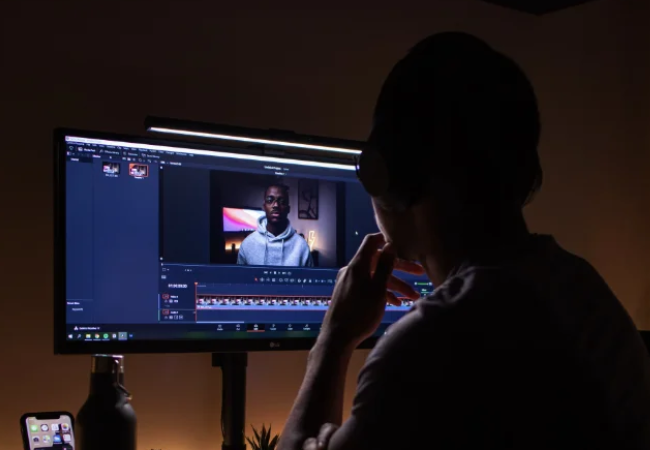
The Film Post-Production program at AMA Warsaw is a unique, comprehensive course in modern film post-production. The curriculum includes Editing, color grading, visual effects (VFX), and 3D animation—all in a single, cohesive course series. This program is designed for people who want to work creatively with visuals at a professional level—regardless of their prior experience. Classes are taught by leading Polish editors, colorists, and VFX and 3D specialists who are active in the film, television, and advertising industries.
Image Post-Production
Comprehensive topics in modern video post-production: film editing, color grading, VFX, and 3D animation. The program is offered at AMA Warsaw.
Space is limited—groups of 10 people.
In addition,
We’ve prepared special terms for those committed to pursuing their education at AMA.
Candidates who pass the admissions process and sign a student contract by the end of June 2026 will receive a 30% discount on their final semester—as support during the final stage of their education.
Duration
2 years, 4 semesters. One semester consists of 8 sessions, held on average every 2 weeks. Classes are held on Fridays from 4:00 p.m. to 8:00 p.m. and on Saturdays and Sundays from 10:00 a.m. to 6:00 p.m.
Start your education in this course

First Year
The first year provides a thorough introduction to the world of film production and post-production. This year lays the groundwork for a solid foundation in various aspects of filmmaking.
Film Language and Film Analysis
- Narrative and Visual Techniques: Students learn how various narrative and visual techniques are used in film to convey emotions and drive the story forward.
- Analysis of Key Films: Students analyze selected films, learning to identify and understand the cinematic techniques used in them.
Image and Sound Technology
- Digital and Analog Image Formats: Learning about the differences between digital and analog formats, their applications, and their advantages and disadvantages.
- The Basics of Audio Editing: An introduction to audio recording and editing techniques that are essential in film post-production.
The Basics of Post-Production
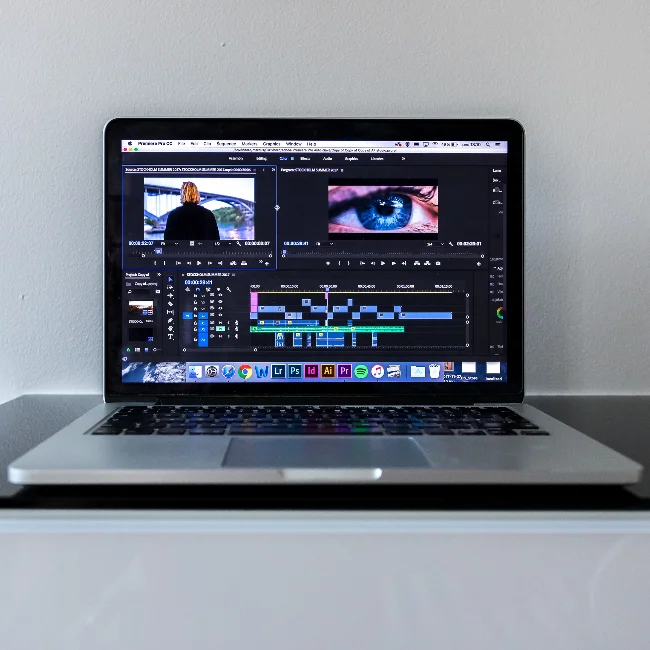
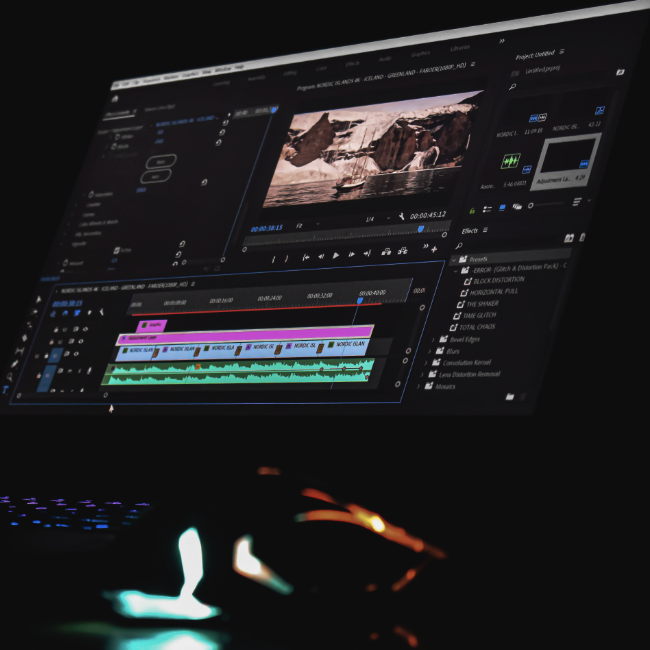
- Introduction to Film Editing: Learn how to use editing software, such as Adobe Premiere Pro and Avid Media Composer, which allow you to cut and organize footage. Theory and history of film editing.
- The Basics of Color Correction and Color Grading: Understanding the Basic Principles of Color Grading Using DaVinci Resolve.
- Introduction to Special Effects and Animation: Learning the basics of VFX and 3D animation using software such as Adobe After Effects and Autodesk Maya.
Film Production
- Fundamentals of Film Production: An introduction to the film production process, from pre-production to post-production, covering the roles and responsibilities of individual members of the film crew.
- Production Planning and Organization: Learning the basic principles of production planning, including scheduling, budgeting, and managing resources and personnel.
Technology and Software in Post-Production
- Video Editing: Using Avid Media Composer, Adobe Premiere Pro, and Final Cut Pro to edit and organize video footage.
- VFX: Practical Applications of Adobe After Effects and Foundry Nuke for Creating Visual Effects.
- Color Grading: Learn how to use DaVinci Resolve for advanced color correction and color grading.
- 3D Animation: An Introduction to Autodesk Maya, used for 3D modeling and animation.
Second Year of the Advanced Specialization Program
The second year focuses on advanced aspects of the chosen specialization, developing the skills necessary for professional work in the film industry. Theory provides the foundation for intensive practical classes, where students apply their acquired knowledge to real-world projects.
1) Specialization: Editing and Color Grading
- Advanced Editing and Color Grading Techniques:
- Professional Editing Platforms: Hands-on classes in Avid Media Composer and Adobe Premiere Pro, focusing on advanced editing techniques, including audio-visual synchronization and multi-camera editing. Editing Various Film Formats: news reports, trailers, commercials, music videos, documentaries, and feature films.
- Advanced Color Grading Training: Intensive courses on using DaVinci Resolve, with an emphasis on advanced color correction strategies, look development, and color workflow management.
- Managing Digital Image Formats: Learning about digital file formats, including RAW and Log, and hands-on exercises in conversion and color management across various color spaces.
- Digital Intermediate (DI) and Delivery: Work on the full scope of DI, from importing footage to final mastering and DCP preparation.
2) VFX and 3D Animation Specialization
- Advanced Techniques in Visual Effects and 3D Animation:
- Advanced Compositing and VFX: Using Foundry Nuke for complex compositing tasks, including digital matte painting, advanced keying, and particle effects.
- 3D Animation and Modeling in Autodesk Maya: Learn advanced modeling, rigging, and animation, with an emphasis on character animation and realistic environments.
- Working in Blender
- Workflow and On-Set Supervision: Hands-on sessions on organizing special effects work, from previsualization (previs) to live supervision, covering tracking, HDRI, and greenscreen.
The second-year curriculum is project-based, allowing students to apply theory in practice under simulated film production conditions. Throughout the year, students participate in various stages of project development, which prepares them for professional work in the industry. In addition, students learn about the elements of film production and festival policies, which is useful for the distribution and promotion of films.
Diploma in Image Post-Production
Completion of the course and obtaining a diploma are based on completing a practical assignment and passing a theoretical exam. Students who achieve a passing grade will receive an AMA FILM ACADEMY Diploma .
AMA students have access to state-of-the-art editing, VFX, and color grading suites, which provide the best conditions for learning and professional development.
A program supported by the Polish Film Institute

Related courses
Editing, Color Grading, VFX
A program focusing on editing, color correction, VFX, and comprehensive video post-production.

Film Directing
A program for those who want to develop their skills in directing, working with actors, and the language of film.
Cinematography
A two-year program focusing on the camera, lighting, composition, and the cinematographer's role on set.

Film Acting
A program for people who want to develop their film acting skills and work in front of the camera.
Course curriculum
Registration Guide
Registration begins on: April 15 , 2026
Recruitment begins on: May 5 , 2026
Course start date: October 3, 2026; end date: June 25, 2028
Exam fee: 250 PLN
Accident Insurance: 70 PLN
Entry fee: 1,900 PLN
Tuition: 9,500 PLN per semester / 19,000 PLN per year
Payable per semester in advance by October 1 and February 15 of each year
or in monthly installments due by the 5th of each month:
October–June 1990 PLN
July–September: 1,000 PLN
» We have prepared special terms for those who are committed to growing their careers at AMA.
Candidates who are accepted and sign a student contract by the end of June 2026 will receive a 30% discount on their final semester—as support during the final stage of their education.
Practice
The course will cover the following practical topics:
- Work Organization – Planning
- creating an editing script, VFX
- Organization of the assembly shop
- work organization within the program
- Learning the interfaces of Avid, Premiere Pro, After Effects, Nuke, Maya, Da Vinci Resolve, and Fusion
- conceptual practical exercises
- production of captions and graphic designs
- creating masks, color extracts, transitions, and dynamic adjustments
- Import and Export of Digital Content
- RAW file processing
- Production of master copies, digital copies in various formats, and DCPs
- DI – digital intermediate
- end-of-semester assignments and the thesis
- object modeling
- texturing
- lighting
- compositing elements
- rendering
- storyboard – technique and style of storytelling through images
- Creating a Film Preview – Animatik (Techniques and Solutions)
- character animation – creating animations that closely follow the film’s narrative arc
- drawing
- Production – Animation (in the selected 3D package)
- post-production (selected package)
- VFX mockups
- VFX thumbnails
- VFX matte painting
- Character VFX – stop motion
- VFX: Water/Fire
- VFX Character Multiplication
- motion control
- makeup
- CGI
- CGI animation
- bullet-time
- motion capture
- 3-D stereo
- 3D Software Packages: , Maya, Houdini, 3ds MAX
- compositing (online): Nuke, After Effects
- Post-Production Management (Production Management) – Basics
Theory
The course will cover the following theoretical topics:
- The History of Optical Effects
- The History of VFX Effects
- the history of animation
- The most popular software packages used in visual effects production
- script analysis and organization of work on visual effects (VFX breakdown, VFX pipeline)
- previews and work on set (tracking markers, green screen, HDRI)
- Digital formats and an understanding of color spaces (color space, LUTs)
- image compositing techniques (camera and object tracking, rotoscoping, keying, 2D/3D compositing)
- creating 3D elements for shots (CGI—modeling, texturing, lighting, and rendering)
- Integration of CGI elements with photographs (matte painting, relighting)
- Graphic elements and animation in the film (Burn-ins, Motion Design, Credits)
- narrative design
- VFX Pipeline Development – Choosing the Right Software
- The Impact of Technology on the Development of VFX and VR
- Description of the equipment and its specifications for VFX purposes
- 3D software packages: Maya, Houdini, 3ds MAX, Cinema 4
- compositing (online): Nuke, After Effects,
- Unreal Engine
- rendering engines
- simulators
- Roto, Mocha
- montage theory
- Composition Techniques in Various Narrative Styles
- Analysis of Direction and Editing
- Principles of editing various film forms:
- new media
- film law
- An Overview of the History of Painting and Photography
- color theory and the structure of light
- digital image recording technology, encoding, digital formats
- color grading
- Selected Topics in Cinematography
Faculty Members in the Following Programs
Faculty members teaching courses in the following major:
- Cezary Grzesiuk
- Jarosław Barzan
- Paweł Orzechowski
- Mikołaj Zientalski
- Adrian Gutowicz
- Mikołaj Valencia
- Hubert Pusek
- Jerzy Zawadzki
- Amadeusz Andrzejewski
- Filip Kovcin
- Jarosław Sterczewski
- Szymon Ronowicz
- Krystian Łochowski
- Cezary Grzesiuk Jr.
- Bartłomiej Bednarz
- Mikołaj Kamler
- Filip Kovcin
Admission Requirements
To apply for admission to the Image Post-Production program, you must take an entrance exam in the form of an interview. If you have work in the fields of film, photography, visual arts, or literature, you may present it during the interview—this is an added advantage, not a requirement.
Candidates at the appropriate proficiency level may apply directly for admission to the second semester or year of the course.
We schedule interview dates with participants on an individual basis.
If you’d like, you can also send your resume or portfolio to the following email address: rekrutacja@amafilmacademy.pl
» We’ve prepared special terms for those committed to pursuing their education at AMA.
Candidates who pass the admissions process and sign a student contract by the end of June 2026 will receive a 30% discount on their final semester—as support during the final stage of their education.
Registration Guide
Registration begins on: April 15 , 2026
Recruitment begins on: May 5 , 2026
Course start date: October 3, 2026; end date: June 25, 2028
Exam fee: 250 PLN
Accident Insurance: 70 PLN
Entry fee: 1,900 PLN
Tuition: 9,500 PLN per semester / 19,000 PLN per year
Payable per semester in advance by October 1 and February 15 of each year
or in monthly installments due by the 5th of each month:
October–June 1990 PLN
July–September: 1,000 PLN
» We have prepared special terms for those who are committed to growing their careers at AMA.
Candidates who are accepted and sign a student contract by the end of June 2026 will receive a 30% discount on their final semester—as support during the final stage of their education.
Practice
The course will cover the following practical topics:
- Work Organization – Planning
- creating an editing script, VFX
- Organization of the assembly shop
- work organization within the program
- Learning the interfaces of Avid, Premiere Pro, After Effects, Nuke, Maya, Da Vinci Resolve, and Fusion
- conceptual practical exercises
- production of captions and graphic designs
- creating masks, color extracts, transitions, and dynamic adjustments
- Import and Export of Digital Content
- RAW file processing
- Production of master copies, digital copies in various formats, and DCPs
- DI – digital intermediate
- end-of-semester assignments and the thesis
- object modeling
- texturing
- lighting
- compositing elements
- rendering
- storyboard – technique and style of storytelling through images
- Creating a Film Preview – Animatik (Techniques and Solutions)
- character animation – creating animations that closely follow the film’s narrative arc
- drawing
- Production – Animation (in the selected 3D package)
- post-production (selected package)
- VFX mockups
- VFX thumbnails
- VFX matte painting
- Character VFX – stop motion
- VFX: Water/Fire
- VFX Character Multiplication
- motion control
- makeup
- CGI
- CGI animation
- bullet-time
- motion capture
- 3-D stereo
- 3D Software Packages: , Maya, Houdini, 3ds MAX
- compositing (online): Nuke, After Effects
- Post-Production Management (Production Management) – Basics
Theory
The course will cover the following theoretical topics:
- The History of Optical Effects
- The History of VFX Effects
- the history of animation
- The most popular software packages used in visual effects production
- script analysis and organization of work on visual effects (VFX breakdown, VFX pipeline)
- previews and work on set (tracking markers, green screen, HDRI)
- Digital formats and an understanding of color spaces (color space, LUTs)
- image compositing techniques (camera and object tracking, rotoscoping, keying, 2D/3D compositing)
- creating 3D elements for shots (CGI—modeling, texturing, lighting, and rendering)
- Integration of CGI elements with photographs (matte painting, relighting)
- Graphic elements and animation in the film (Burn-ins, Motion Design, Credits)
- narrative design
- VFX Pipeline Development – Choosing the Right Software
- The Impact of Technology on the Development of VFX and VR
- Description of the equipment and its specifications for VFX purposes
- 3D software packages: Maya, Houdini, 3ds MAX, Cinema 4
- compositing (online): Nuke, After Effects,
- Unreal Engine
- rendering engines
- simulators
- Roto, Mocha
- montage theory
- Composition Techniques in Various Narrative Styles
- Analysis of Direction and Editing
- Principles of editing various film forms:
- new media
- film law
- An Overview of the History of Painting and Photography
- color theory and the structure of light
- digital image recording technology, encoding, digital formats
- color grading
- Selected Topics in Cinematography
Faculty Members in the Following Programs
Faculty members teaching courses in the following major:
- Cezary Grzesiuk
- Jarosław Barzan
- Paweł Orzechowski
- Mikołaj Zientalski
- Adrian Gutowicz
- Mikołaj Valencia
- Hubert Pusek
- Jerzy Zawadzki
- Amadeusz Andrzejewski
- Filip Kovcin
- Jarosław Sterczewski
- Szymon Ronowicz
- Krystian Łochowski
- Cezary Grzesiuk Jr.
- Bartłomiej Bednarz
- Mikołaj Kamler
- Filip Kovcin
Admission Requirements
To apply for admission to the Image Post-Production program, you must take an entrance exam in the form of an interview. If you have work in the fields of film, photography, visual arts, or literature, you may present it during the interview—this is an added advantage, not a requirement.
Candidates at the appropriate proficiency level may apply directly for admission to the second semester or year of the course.
We schedule interview dates with participants on an individual basis.
If you’d like, you can also send your resume or portfolio to the following email address: rekrutacja@amafilmacademy.pl
» We’ve prepared special terms for those committed to pursuing their education at AMA.
Candidates who pass the admissions process and sign a student contract by the end of June 2026 will receive a 30% discount on their final semester—as support during the final stage of their education.
Learn with us. Explore the world of film!
Get inspired by film and learn from the best. Gain a modern profession and work professionally in the film industry. Check the current enrolment.
Enrol at AMA