

Opis kierunku
We teach the art and craft of filmmaking through a dynamic blend of classroom instruction, hands-on film workshops, and immediate directing experience.
It is possible to learn Polish in parallel, which ensures continuation of regular studies or work in the film industry.
The field of study is carried out at AMA Kraków.
Directing-Cinematography
Filmmaking that gives basic skills in directing, filming, editing and authoring of various audiovisual forms. The field of study is carried out at AMA Kraków. Limited spots available – group of 10 people.
Additionally
For those committed to developing their skills at AMA, we have prepared special conditions. Candidates who pass the recruitment process and sign a study agreement by the end of June 2026 will receive a 30% discount on the final semester — as support during the last stage of their education.
Duration
1 year, 2 semesters. Classes are held from Tuesday to Friday
400 hours a year
Rozpocznij edukację na tym kierunku
Aplikuj na kierunek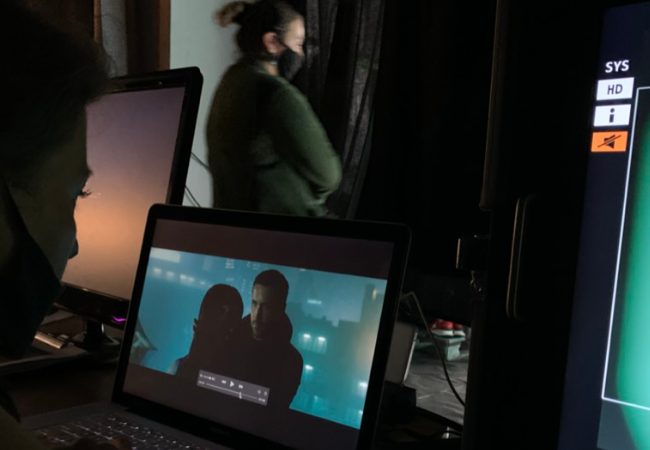

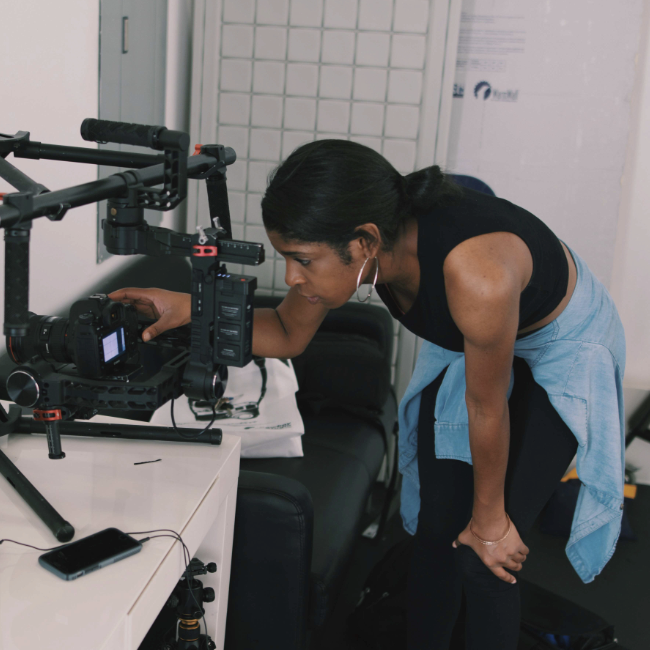
Directing-Cinematography — filmmaking in English, in the heart of Central Europe.
You are behind the camera on day one.
Directing-Cinematography at AMA Kraków is a one-year, intensive full-time program for international students who want to learn the complete craft of filmmaking — directing, cinematography, screenwriting, editing and AI-assisted production — in English, in one of Europe’s most creatively charged cities.
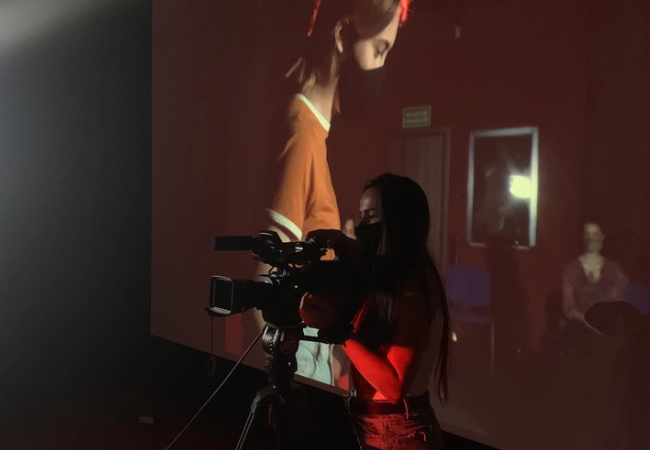
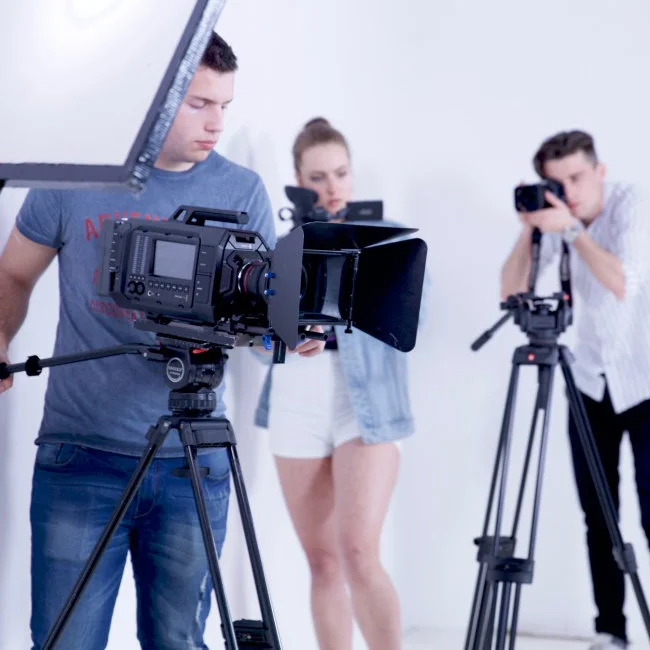
This is not a theoretical film studies course. It is a hands-on filmmaking program: you write, direct, shoot and edit your own films from the very first weeks. You work alongside Polish and international students, learn from active industry professionals, and graduate with a diploma film, a showreel and the skills to enter the industry.
After the program you are ready for roles such as: director, director of photography, filmmaker, content creator, video producer or creative collaborator in film, advertising, streaming and new media.
ABOUT THE PROGRAM
Directing-Cinematography is AMA’s flagship program for international students — a complete filmmaking course that teaches both the director’s vision and the cinematographer’s eye in a single, integrated year. Most film schools separate these disciplines. At AMA, you learn them together, because the most effective filmmakers understand both sides of the camera.
The program covers the full production cycle: from developing an idea and writing a screenplay, through directing actors, operating the camera, designing light and visual language, to editing, color grading and the basics of post-production and AI tools. You don’t specialize in one narrow role — you build a complete understanding of how films are made, and then find your own voice within that process.
Kraków is not a coincidence. As a UNESCO City of Literature and one of Central Europe’s most active film and creative production hubs, it provides a natural backdrop and a real industry environment. Many AMA graduates have gone on to work with Polish and international productions — some starting while still enrolled in the program.
Classes are conducted entirely in English. Polish language learning is available in parallel and is strongly recommended for students planning to stay in Poland, join Polish productions or continue studies at Polish institutions.
Who is this program for?
Directing-Cinematography is the right choice if you want to learn filmmaking from the ground up in an intensive, practical environment — and if you want to do it in English, in a European city with a strong creative scene and affordable living costs. No prior film school experience is required. What matters is commitment to the craft and readiness to work.
Career paths
After completing the program you can develop professionally in the following directions:
Director — leading a film, commercial or content project from concept to final cut. Managing actors, crew, visual language and the overall creative process.
Director of Photography (DOP) — responsible for the visual character of a film: camera, light, lenses, movement and color. The role that shapes what the audience sees and feels.
Filmmaker — an independent creator who handles multiple roles: writing, directing and shooting their own projects for film festivals, platforms, brands and new media.
Video Producer / Content Director — creating video content for brands, agencies, streaming platforms and digital channels, with full control over the creative and production process.
Creative Collaborator — working as part of a film or advertising crew in roles such as camera assistant, assistant director, production coordinator or script supervisor — building industry experience from the ground up.
Why Kraków
Kraków is one of the most affordable major cities in Europe for international students, with a thriving creative scene, an active film production market and a strong English-speaking community. It is a UNESCO World Heritage city with a film culture that punches far above its size — home to festivals, production companies, studios and a growing number of international co-productions. Living costs are significantly lower than in Western Europe, which means your budget goes further while your creative environment stays high.
About AI in the program
Contemporary filmmaking increasingly combines material shot on set with AI-assisted tools: from pre-visualization and generative references to cleanup, set extensions and hybrid image creation. The program introduces these tools as part of a modern filmmaker’s workflow — not as a replacement for craft, but as an extension of it. You learn when to use AI and when the shot needs to be done the traditional way.
FAQ
Is the program taught entirely in English?
Yes. All classes, workshops, critiques and assessments are conducted in English. Polish language learning is available as an optional parallel course and is recommended for students planning to work in Poland or continue studying at Polish institutions.
Do I need previous film school experience to apply?
No. The program is designed for motivated beginners and for those with some creative background who want to develop in a structured, practical environment. The admission process is an online interview — no portfolio is required, though you are welcome to share previous work.
What is the difference between Directing-Cinematography and the separate Directing or Cinematography programs?
Directing and Cinematography are specialized one-year programs for students who have already decided on a specific role. Directing-Cinematography is an integrated program that covers both disciplines — for students who want to build a complete filmmaking foundation or who aren’t yet certain which direction they want to specialize in.
What equipment do students work with?
You work with professional cinema cameras, lighting rigs, grip equipment, sound gear and industry-standard editing and post-production software. AMA operates its own rental facility, giving students direct access to production equipment throughout the program.
What is the graduation project?
The program culminates in the production of a diploma film — written, directed, shot and edited by the student, and presented publicly before a jury at an open exam. A theoretical examination is also required. Students who pass receive the AMA Film Academy Diploma.
How does the AI component work in practice?
AI tools are integrated throughout the program — not as a separate module. You use generative tools for pre-visualization, moodboarding and concept development, as well as AI-assisted workflows in post-production (cleanup, color, set extension). The emphasis is on understanding when and why to use these tools, not on prompt generation for its own sake.
Can I learn Polish while studying?
Yes. Parallel Polish language learning is available and actively encouraged. Basic Polish opens up significant opportunities in the local film industry and in everyday life in Kraków.
iploma — Directing-Cinematography
The basis for completing the program and receiving the diploma is the production and public presentation of a diploma film — written, directed and shot by the student — presented before an open jury at the end-of-year examination, as well as passing a theoretical exam. Students who receive a positive grade are awarded the AMA Film Academy Diploma.
The program is supported by the Polish Film Institute.
Powiązane kierunki
Directing-Cinematography
English course in directing, cinematography, camera work and basic film workflow.
Program kierunku
Aplikuj na kierunekRegistration booklet
Registration from: April 15, 2026
Recruitment online from:May 1, 2026
Time:October 13, 2026 – June 30, 2027
Examination fee: EUR 70
Entry fee: EUR 800
Semester Costs:
EUR / semester 2500
EUR / year 5000
Paid per semester in advance to:
October 1 and February 15 of each year,
or in monthly installments payable by the 5th of each month
October – June EUR 638
Practice
During the program, students work on the following practical areas:
- Camera operation and cinematography fundamentals — working with cinema cameras, lenses, exposure, focus, RAW and LOG formats from day one
- Lighting for film — studio, location and natural light; understanding how light shapes emotion, character and visual style
- Composition and visual language — framing, movement, depth, leading the viewer’s eye through the image
- Directing actors — casting, rehearsal, blocking, building emotional truth in a scene
- Mastershot and in-camera editing — building a complete scene in a single setup; understanding coverage and rhythm before the cut
- Multi-camera systems and TV studio directing — live production workflow, switching between cameras, directing in real time
- Screenplay development and story structure — from concept to shooting script; dramaturgy and scene construction
- Film editing — narrative editing, pacing, rhythm, working with dialogue and action sequences
- Color correction and color grading — from technical correction to building a visual style
- Basics of sound in post-production — dialogue, atmosphere, music placement and audio workflow
- AI in pre-production — generative moodboards, visual references and pre-visualization
- AI-assisted post-production — cleanup, set extension, image enhancement and hybrid image workflows
- Short film exercises — three genre exercises (drama, documentary, advertising) over the course of the year
- Diploma film production — a complete short film written, directed and shot by the student, presented publicly before a jury
- Masterclasses and projections — meetings with working industry professionals from Polish and international productions
Theory
During the program, students study the following theoretical areas:
- Film language and grammar — shots, angles, camera movement and their narrative meaning
- History of cinema — from silent film through classical Hollywood to contemporary European and world cinema
- Visual aesthetics — analysis of cinematography, painting and photography as sources of cinematic inspiration
- Film dramaturgy — story structure, tension, character, emotion as the engine of narrative
- Film analysis — deconstructing scenes from the perspective of directing, cinematography and editing decisions
- Visual concept and film design — developing a coherent visual identity for a project
- Directing documentary and advertising — specific approaches, formats and audience expectations
- Working with a crew — production hierarchy, communication on set, collaboration between director and DOP
- VFX and special effects — fundamentals — understanding the pipeline between set and post-production
- AI in contemporary filmmaking — possibilities, limitations and responsible creative use
- Copyright and ethics in content creation — rights, licensing, use of AI-generated material
- Distribution and the digital landscape — platforms, formats, how films reach audiences today
Classes lead
Lecturers conducting classes:
- Jakub Chełkowski
- Dariusz Jarzyna
- Daria Lipko
- Michał Sosna
- Sebastian Strama
- Piotr Paruch
- Natalia Gajecka
Recruitment conditions
The condition for applying for admission to the Directing-Cinematography Course is to take the entrance examination in the form of an interview and send a CV specifying the candidate’s predispositions in advance.
The date of the recruitment interview is set individually. The interview takes place ONLINE
Please send your CV to the e-mail address: rekrutacja@amafilmacademy.pl
Registration booklet
Registration from: April 15, 2026
Recruitment online from:May 1, 2026
Time:October 13, 2026 – June 30, 2027
Examination fee: EUR 70
Entry fee: EUR 800
Semester Costs:
EUR / semester 2500
EUR / year 5000
Paid per semester in advance to:
October 1 and February 15 of each year,
or in monthly installments payable by the 5th of each month
October – June EUR 638
Practice
During the program, students work on the following practical areas:
- Camera operation and cinematography fundamentals — working with cinema cameras, lenses, exposure, focus, RAW and LOG formats from day one
- Lighting for film — studio, location and natural light; understanding how light shapes emotion, character and visual style
- Composition and visual language — framing, movement, depth, leading the viewer’s eye through the image
- Directing actors — casting, rehearsal, blocking, building emotional truth in a scene
- Mastershot and in-camera editing — building a complete scene in a single setup; understanding coverage and rhythm before the cut
- Multi-camera systems and TV studio directing — live production workflow, switching between cameras, directing in real time
- Screenplay development and story structure — from concept to shooting script; dramaturgy and scene construction
- Film editing — narrative editing, pacing, rhythm, working with dialogue and action sequences
- Color correction and color grading — from technical correction to building a visual style
- Basics of sound in post-production — dialogue, atmosphere, music placement and audio workflow
- AI in pre-production — generative moodboards, visual references and pre-visualization
- AI-assisted post-production — cleanup, set extension, image enhancement and hybrid image workflows
- Short film exercises — three genre exercises (drama, documentary, advertising) over the course of the year
- Diploma film production — a complete short film written, directed and shot by the student, presented publicly before a jury
- Masterclasses and projections — meetings with working industry professionals from Polish and international productions
Theory
During the program, students study the following theoretical areas:
- Film language and grammar — shots, angles, camera movement and their narrative meaning
- History of cinema — from silent film through classical Hollywood to contemporary European and world cinema
- Visual aesthetics — analysis of cinematography, painting and photography as sources of cinematic inspiration
- Film dramaturgy — story structure, tension, character, emotion as the engine of narrative
- Film analysis — deconstructing scenes from the perspective of directing, cinematography and editing decisions
- Visual concept and film design — developing a coherent visual identity for a project
- Directing documentary and advertising — specific approaches, formats and audience expectations
- Working with a crew — production hierarchy, communication on set, collaboration between director and DOP
- VFX and special effects — fundamentals — understanding the pipeline between set and post-production
- AI in contemporary filmmaking — possibilities, limitations and responsible creative use
- Copyright and ethics in content creation — rights, licensing, use of AI-generated material
- Distribution and the digital landscape — platforms, formats, how films reach audiences today
Classes lead
Lecturers conducting classes:
- Jakub Chełkowski
- Dariusz Jarzyna
- Daria Lipko
- Michał Sosna
- Sebastian Strama
- Piotr Paruch
- Natalia Gajecka
Recruitment conditions
The condition for applying for admission to the Directing-Cinematography Course is to take the entrance examination in the form of an interview and send a CV specifying the candidate’s predispositions in advance.
The date of the recruitment interview is set individually. The interview takes place ONLINE
Please send your CV to the e-mail address: rekrutacja@amafilmacademy.pl
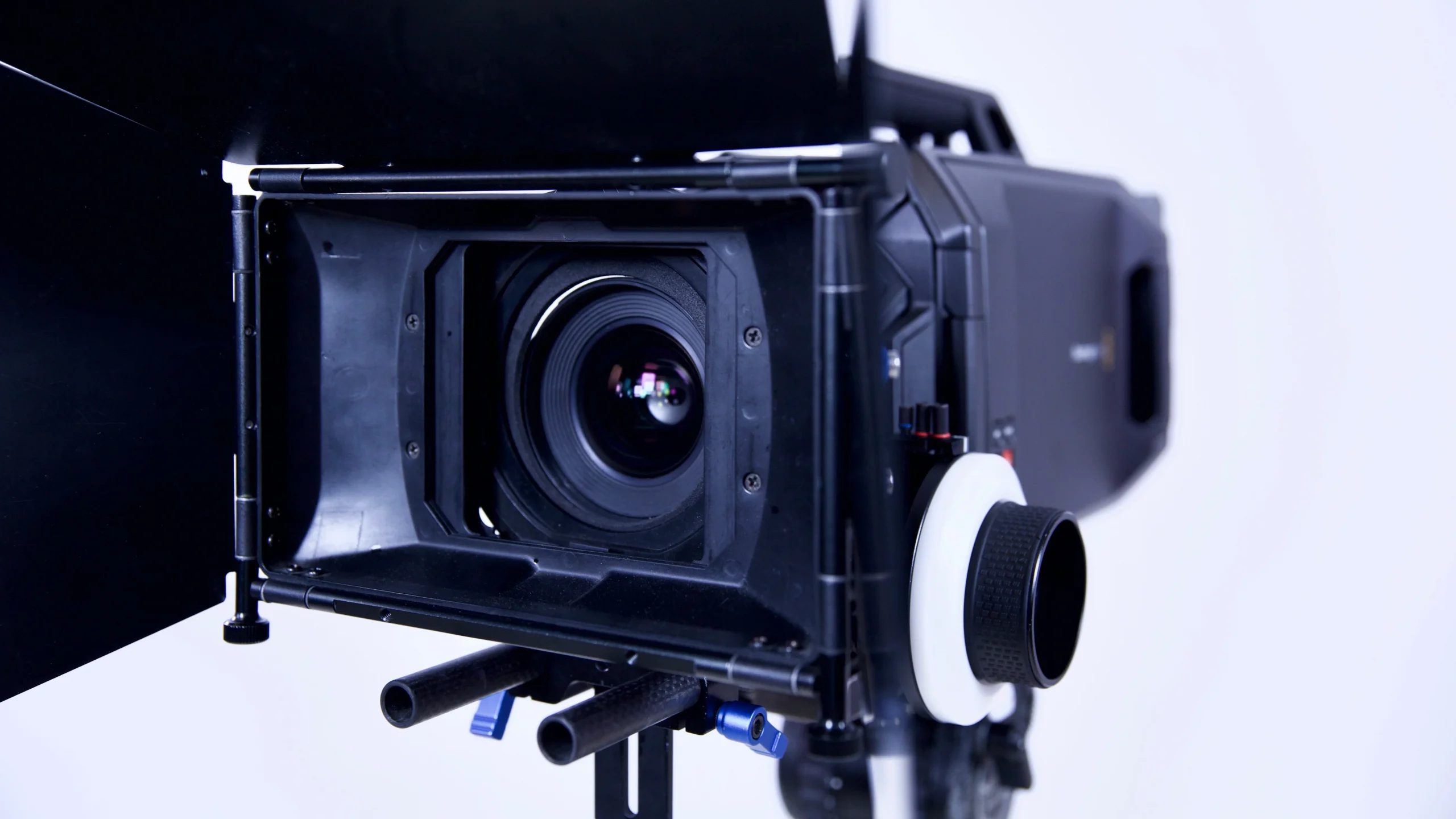
Ucz się z nami. Poznaj świat filmu!
Nakręć się na film i ucz się od najlepszych. Zdobądź nowoczesny zawód,
pracuj profesjonalnie w branży filmowej. Zobacz aktualne zapisy.