

Course description
Future Filmmaking Lab – AI and New Technologies in Film Production
This is an intensive workshop program offered by AMA Kraków that combines filmmaking with AI, generative imagery, VFX, and modern post-production tools.
The program spans 16 weekends across 2 semesters—covering everything from visual concept and set design, through generative video, AI-assisted editing, and hybrid imagery, to legal and ethical issues and a final original project. Participants work with specific tools—Midjourney, Runway, Sora, DaVinci Resolve, ComfyUI, ElevenLabs—but always within the context of directorial, narrative, and production decisions. This is not a course on how to use these tools. The program’s core focus is the conscious integration of new technologies into the actual creative process—in feature films, documentaries, and contemporary audiovisual forms. The program is designed for individuals with experience in film or audiovisual production who wish to expand their skill set with technological competencies without sacrificing their cinematic vision.
Create a video with AI. Consciously.
Future Filmmaking Lab is an intensive workshop program offered by AMA Kraków that teaches the practical application of AI and new technologies in modern film production. 10 weekends, 2 semesters, and a final project.
Price for 2026 (first edition): 8,900 PLN
Standard price: 11,000 PLN
Space is limited—groups of 10 people.
In addition,
A custom final project with creative and technical consultations
We’ve prepared special terms for those committed to pursuing their education at AMA.
Candidates who pass the admissions process and sign a student contract by the end of June 2026 will receive a 30% discount on their final semester—as support during the final stage of their education.
Duration
1 year, 2 semesters. One semester consists of 5 sessions held every 2 weeks. Classes are held on Saturdays and Sundays from 10:00 a.m. to 6:00 p.m.
Start your education in this course

About the Program
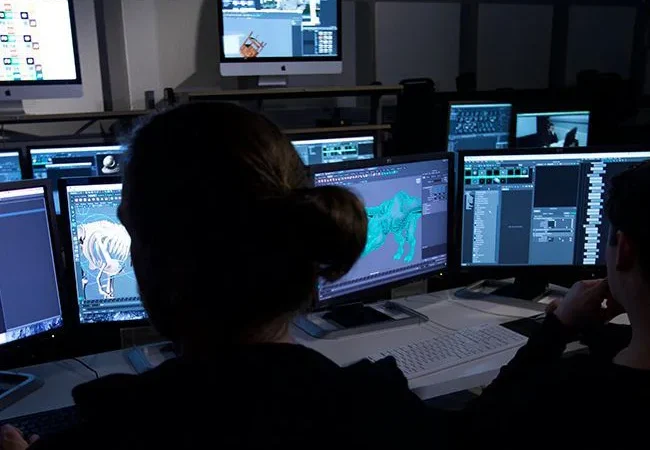
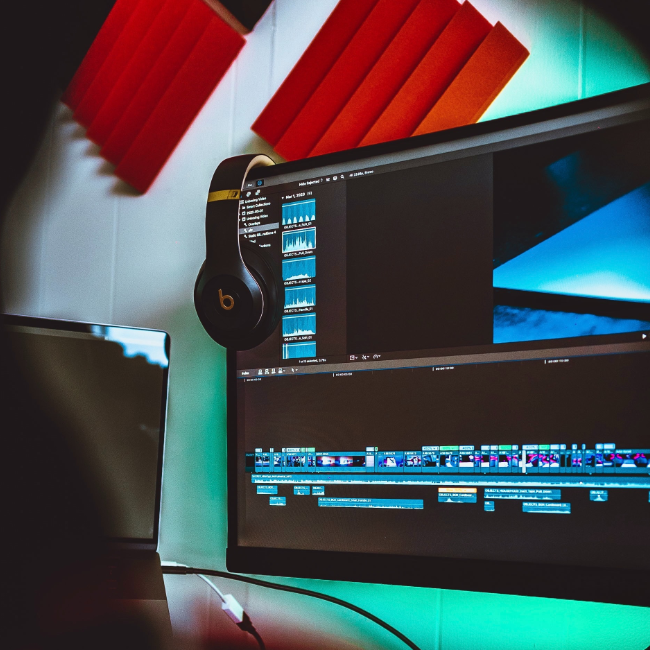
The Future Filmmaking Lab at AMA Kraków teaches students how to use AI and new technologies thoughtfully in the film production process. The program combines traditional creative techniques with a modern workflow based on generative imagery, AI video, post-production, VFX, AI audio, and hybrid imagery.
This is not a course on how to use individual AI tools. At AMA, we view new technologies as part of the contemporary filmmaking toolkit—a space where visual concepts, directorial decisions, and narrative thinking intersect with tools that transform the way images are created. That is why the program develops not only technical skills, but above all creative awareness and the ability to make decisions in a new production environment.
Today’s filmmakers work not only with cameras and editing, but also with computer-generated imagery, compositing, AI in sound and music, hybrid formats, and content developed at the intersection of traditional film sets and AI tools. That is why the program covers the entire process—from visual concept and scene design, through generative video and AI-assisted editing, to VFX, hybrid imagery, legal and ethical issues, and a final original project.
Who is it for?
The program is for people who:
- work in audiovisual production and want to incorporate AI into their workflow,
- are directors, cinematographers, editors, or creative producers,
- They create short-form videos and explore new ways of working with visuals and sound,
- have completed a degree or courses in film, the arts, or media and wish to develop their technological skills,
- They want to consciously combine traditional filmmaking techniques with generative tools.
This program is for those who want to use AI thoughtfully—not just to test tools.
What You’ll Learn
During the course, you’ll learn, among other things:
- developing a visual concept using generative tools — mood boards, lookbooks, pre-visualization,
- designing scenes and sequences for a modern editing and post-production workflow,
- practical creation of a short-form piece using generative moving images,
- the integration of computer-generated imagery with traditional film footage,
- the use of AI in editing, selecting footage, and creating different versions of the narrative,
- AI Audio Basics — AI-generated sound, music, and voice-overs,
- the basics of VFX, compositing, and hybrid imagery,
- differences in the use of AI in feature films and documentaries,
- legal, ethical, and production issues related to AI in the creative process.
The most important thing is that you’ll learn to incorporate new technologies into your filmmaking in a thoughtful way—through creative decisions, not just because AI is trendy.
What Is Learning Like?
The program is practical and project-based. Participants work on real-world creative tasks—they develop visual concepts, design scenes, create short-form videos using AI, test the integration of footage with generated imagery, and develop their own final project throughout the year.
The program covers working with AI tools for generating images, video, sound, and music, as well as with professional editing and VFX software. An important aspect is learning to use AI as a tool that expands creative possibilities but does not replace cinematic thinking or the creator’s decisions.
Educational Model
- Schedule: Weekend (Saturday–Sunday)
- Duration: 1 year, 2 semesters, 16 sessions
- Frequency: on average, every 2 weeks
- Admission: for individuals with experience in audiovisual production—those who have completed AMA film courses, have a degree in film, the arts, or media studies, or have comparable professional experience
Learning Outcome
Upon completing the program, participants will be able to make informed use of AI and new technologies at every stage of film production—from visual concept to the final image and sound. They understand how to design work with generated imagery, VFX, and AI audio while maintaining creative control and visual consistency throughout the project. They will create an original final project to include in their portfolio. This program is for those who want to be filmmakers of the new generation—not technologists, but creators who understand these new tools.
Degree in Future Filmmaking Lab
To complete the course and earn a diploma, students must submit a graduation film, which is screened for an audience during an open exam, and pass a theoretical exam. Students who pass receive an AMA FILM ACADEMY Diploma.
A program supported by the Polish Film Institute

PROGRAM:
SEMESTER I — From Concept to First Draft (October 2026 – January 2027)
Module 1. Introduction to AI and New Technologies in Film Production
A shared conceptual framework and familiarity with current tools, capabilities, and limitations of AI in film and video. Selection of a specific area of interest for the project.
Examples of tools: ChatGPT, Perplexity, Midjourney, Runway, Veo3, Kling, Producer, Seedance, Eleven Labs, and many others.
Module 2. AI Imaging and Visual Concept Development
Creating mood boards, lookbooks, design styles, and visualizations using generative tools.Examples of tools: Midjourney, DALL-E, Stable Diffusion, ComfyUI, Nano Banana, and current modules
Module 3. Visual Direction and Set Design
Translating ideas into scenes, dramaturgy, film language, shots, and sequences, taking into account narrative, rhythm, continuity, and the subsequent editing and post-production workflow.
Module 4. Generative AI Video — Hands-On Practice in Creating Short-Form Content
Creating short-form works and scene sketches using generative motion graphics, with an emphasis on cinematic logic, visual coherence, and the language of film.
Examples of tools: Runway Gen-3, Veo3, Kling, Pika, Nano Banana—and current modules
Module 5. AI in Editing, Sound, and Narrative Decisions
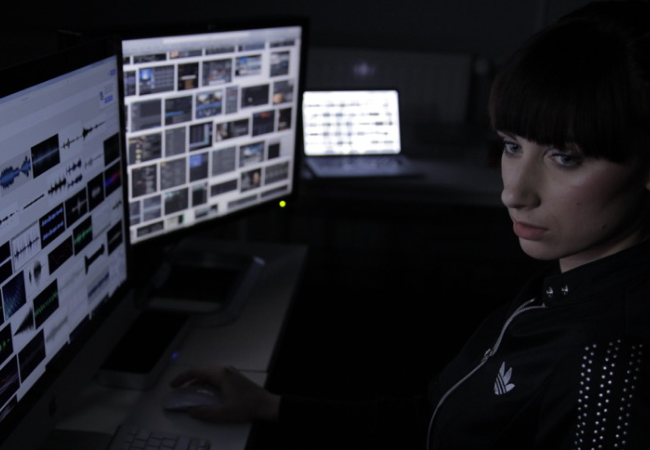
Using AI to support content selection, workflow organization, and narrative versioning. An introduction to audio AI: generating music, sound design, and voice-over.
Examples of tools: DaVinci Resolve AI, Descript, Suno, ElevenLabs, and the latest modules
Outcomes of Semester I: a conceptual project proposal, an initial video concept or scene outline, and the foundations for the individual direction of the final project.
SEMESTER II — From a Hybrid Image to the Final Project (February–June 2027)
Module 6. VFX, Compositing, and Hybrid Film Imaging
An introduction to modern hybrid imaging, planning shots for VFX, and combining footage with synthetic elements.
Examples of tools: After Effects, Nuke, DaVinci Fusion
Module 7. AI in Feature Films and Documentaries
An analysis of the differences between the use of AI in fiction and documentary, with a particular focus on authenticity, representation, and ethics.
Module 8. Law, Ethics, and Responsible Manufacturing
Authorship, licenses, process transparency, production security, and communication for an AI-based project.
Module 9. Development and Finalization of the Final Project
Intensive work on an individual or group final project. Creative, technical, and production consultations. Preparation of presentation materials.
Module 10. Project Presentations and Program Summary
Presentation of results, expert analysis of creative and technological decisions, and a summary of the skills acquired over the course of the year.
Related courses
Editing (narrative editing)
A course on narrative editing, film rhythm, post-production, and working with AI

Cinematography + AI
A program focusing on cinematography, camera work, lighting, and contemporary camera operator workflows.

Visual Storytelling
A program focused on image design, visual storytelling, and thoughtful audiovisual form.

Film Directing + AI
A program focusing on cinematography, working with a crew, and modern production processes.
Image Post-Production + AI
A course on compositing, visual effects, AI, and the final film image.
Course curriculum
Registration Guide
Registration begins on: April 15 , 2026
Recruitment begins on: May 5 , 2026
Course start date: October 13, 2026; end date: June 30, 2027
Exam fee: 250 PLN
Accident Insurance: 70 PLN
Entry fee: 1,900 PLN
Tuition: 8,900 PLN per semester / 17,800 PLN per year
Payable per semester in advance by October 1 and February 15 of each year
or in monthly installments due by the 5th of each month:
October–June: 1,850 PLN
July–September: 1,000 PLN
» We’ve prepared special terms for those committed to pursuing their education at AMA.
Candidates who pass the admissions process and sign a student contract by the end of June 2026 will receive a 30% discount on the final semester—as support during the final stage of their education.
Practice
The course will cover the following practical topics:
- p]:pt-0 [&>p]:mb-2 [&>p]:my-0″>
developing a visual concept using generative tools — mood boards, lookbooks, pre-visualization
- p]:pt-0 [&>p]:mb-2 [&>p]:my-0″>
Designing scenes and sequences for a modern editing and post-production workflow
- p]:pt-0 [&>p]:mb-2 [&>p]:my-0″>
creating a short film using generative moving images
- p]:pt-0 [&>p]:mb-2 [&>p]:my-0″>
Integration of computer-generated imagery with traditional film footage — visual and narrative coherence
- p]:pt-0 [&>p]:mb-2 [&>p]:my-0″>
the use of AI in the selection and organization of footage — transcription, tagging, and classification of clips
- p]:pt-0 [&>p]:mb-2 [&>p]:my-0″>
AI in Editing — Automatic Cuts, Rough Cuts, and Narrative Versions
- p]:pt-0 [&>p]:mb-2 [&>p]:my-0″>
AI Audio — AI-powered music, sound design, and voice-over generation
- p]:pt-0 [&>p]:mb-2 [&>p]:my-0″>
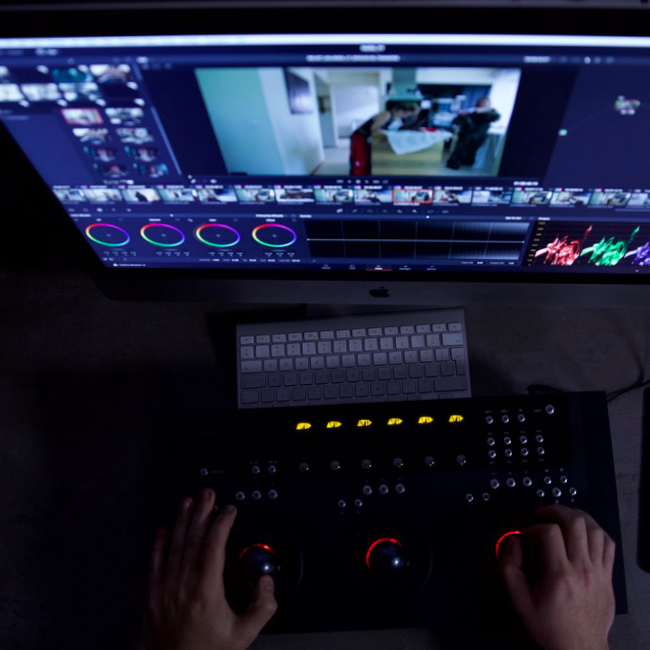
AI in Color Correction — Automatic Color Matching and Critical Verification
- p]:pt-0 [&>p]:mb-2 [&>p]:my-0″>
The basics of VFX, compositing, and hybrid imagery — combining filmed footage with computer-generated elements
- p]:pt-0 [&>p]:mb-2 [&>p]:my-0″>
VFX shot planning — preparing footage for hybrid post-production
- p]:pt-0 [&>p]:mb-2 [&>p]:my-0″>
Creating hybrid shots — a classic film image combined with synthetic elements
- p]:pt-0 [&>p]:mb-2 [&>p]:my-0″>
hands-on work with tools for creating images, video, sound, and music
- p]:pt-0 [&>p]:mb-2 [&>p]:my-0″>
preparation of legal documentation for a project utilizing AI
- p]:pt-0 [&>p]:mb-2 [&>p]:my-0″>
Creative and technical consultations on the student’s original final project
- p]:pt-0 [&>p]:mb-2 [&>p]:my-0″>
Development and completion of the final project—from concept to presentation before the committee
- p]:pt-0 [&>p]:mb-2 [&>p]:my-0″>
Building a portfolio — selecting and presenting the best work from throughout the year
Theory
The course will cover the following theoretical topics:
- p]:pt-0 [&>p]:mb-2 [&>p]:my-0″>
A Map of AI Tools in Film Production — An Overview of Current Capabilities and Limitations
- p]:pt-0 [&>p]:mb-2 [&>p]:my-0″>
Visual Direction — Dramaturgy, Narrative, and Set Design for a Hybrid Workflow
- p]:pt-0 [&>p]:mb-2 [&>p]:my-0″>
AI in Feature Films and Documentaries — Differences in Approach, Ethical and Artistic Boundaries
- p]:pt-0 [&>p]:mb-2 [&>p]:my-0″>
Copyright in the Context of AI — Authorship of Generated Content, Licenses, and Regulations
- p]:pt-0 [&>p]:mb-2 [&>p]:my-0″>
AI Ethics in Film Production — Process Transparency, Creative Responsibility, Attribution
- p]:pt-0 [&>p]:mb-2 [&>p]:my-0″>
Reputation protection and production security — deepfakes, voice synthesis, compliance
- p]:pt-0 [&>p]:mb-2 [&>p]:my-0″>
Industry Regulations — The Stances of Film Organizations and Broadcasters on AI
- p]:pt-0 [&>p]:mb-2 [&>p]:my-0″>
Hybrid workflow — integrating AI tools with the traditional creative process
- p]:pt-0 [&>p]:mb-2 [&>p]:my-0″>
Analysis of Leading Film Projects Using AI — Case Studies
Faculty Members in the Following Programs
Faculty members teaching courses in the following major:
- Jacek Nagłowski
- Tomasz Goldbaum-Właziński
- Jarosław Żamojda
- Krzysztof Hrycak
- Patryk Jordanowicz
- Bartek Nalazek
- Jarosław Barzan
- Filip Kovcin
- Tomasz Poznański
- Michał Kowalski
- Krystian Łochowski
- Kajetan Czarnecki
- Paweł Orzechowski
Admission Requirements
To apply for admission to the full-time Film Editing, Grading, and VFX program, you must take an entrance exam in the form of an interview. If you have work in the fields of film, photography, visual arts, or literature, you may present it during the interview—this is an added advantage, not a requirement.
Candidates at the appropriate proficiency level may apply directly for admission to the second semester or year of the course.
We schedule interview dates with participants on an individual basis.
If you’d like, you can also send your resume or portfolio to the following email address: rekrutacja@amafilmacademy.pl
» We have prepared special terms for those who are committed to growing their careers at AMA.
Candidates who are accepted and sign a student contract by the end of June 2026 will receive a 30% discount on their final semester—as support during the final stage of their education.
Registration Guide
Registration begins on: April 15 , 2026
Recruitment begins on: May 5 , 2026
Course start date: October 13, 2026; end date: June 30, 2027
Exam fee: 250 PLN
Accident Insurance: 70 PLN
Entry fee: 1,900 PLN
Tuition: 8,900 PLN per semester / 17,800 PLN per year
Payable per semester in advance by October 1 and February 15 of each year
or in monthly installments due by the 5th of each month:
October–June: 1,850 PLN
July–September: 1,000 PLN
» We’ve prepared special terms for those committed to pursuing their education at AMA.
Candidates who pass the admissions process and sign a student contract by the end of June 2026 will receive a 30% discount on the final semester—as support during the final stage of their education.
Practice
The course will cover the following practical topics:
- p]:pt-0 [&>p]:mb-2 [&>p]:my-0″>
developing a visual concept using generative tools — mood boards, lookbooks, pre-visualization
- p]:pt-0 [&>p]:mb-2 [&>p]:my-0″>
Designing scenes and sequences for a modern editing and post-production workflow
- p]:pt-0 [&>p]:mb-2 [&>p]:my-0″>
creating a short film using generative moving images
- p]:pt-0 [&>p]:mb-2 [&>p]:my-0″>
Integration of computer-generated imagery with traditional film footage — visual and narrative coherence
- p]:pt-0 [&>p]:mb-2 [&>p]:my-0″>
the use of AI in the selection and organization of footage — transcription, tagging, and classification of clips
- p]:pt-0 [&>p]:mb-2 [&>p]:my-0″>
AI in Editing — Automatic Cuts, Rough Cuts, and Narrative Versions
- p]:pt-0 [&>p]:mb-2 [&>p]:my-0″>
AI Audio — AI-powered music, sound design, and voice-over generation
- p]:pt-0 [&>p]:mb-2 [&>p]:my-0″>
AI in Color Correction — Automatic Color Matching and Critical Verification
- p]:pt-0 [&>p]:mb-2 [&>p]:my-0″>
The basics of VFX, compositing, and hybrid imagery — combining filmed footage with computer-generated elements
- p]:pt-0 [&>p]:mb-2 [&>p]:my-0″>
VFX shot planning — preparing footage for hybrid post-production
- p]:pt-0 [&>p]:mb-2 [&>p]:my-0″>
Creating hybrid shots — a classic film image combined with synthetic elements
- p]:pt-0 [&>p]:mb-2 [&>p]:my-0″>
hands-on work with tools for creating images, video, sound, and music
- p]:pt-0 [&>p]:mb-2 [&>p]:my-0″>
preparation of legal documentation for a project utilizing AI
- p]:pt-0 [&>p]:mb-2 [&>p]:my-0″>
Creative and technical consultations on the student’s original final project
- p]:pt-0 [&>p]:mb-2 [&>p]:my-0″>
Development and completion of the final project—from concept to presentation before the committee
- p]:pt-0 [&>p]:mb-2 [&>p]:my-0″>
Building a portfolio — selecting and presenting the best work from throughout the year
Theory
The course will cover the following theoretical topics:
- p]:pt-0 [&>p]:mb-2 [&>p]:my-0″>
A Map of AI Tools in Film Production — An Overview of Current Capabilities and Limitations
- p]:pt-0 [&>p]:mb-2 [&>p]:my-0″>
Visual Direction — Dramaturgy, Narrative, and Set Design for a Hybrid Workflow
- p]:pt-0 [&>p]:mb-2 [&>p]:my-0″>
AI in Feature Films and Documentaries — Differences in Approach, Ethical and Artistic Boundaries
- p]:pt-0 [&>p]:mb-2 [&>p]:my-0″>
Copyright in the Context of AI — Authorship of Generated Content, Licenses, and Regulations
- p]:pt-0 [&>p]:mb-2 [&>p]:my-0″>
AI Ethics in Film Production — Process Transparency, Creative Responsibility, Attribution
- p]:pt-0 [&>p]:mb-2 [&>p]:my-0″>
Reputation protection and production security — deepfakes, voice synthesis, compliance
- p]:pt-0 [&>p]:mb-2 [&>p]:my-0″>
Industry Regulations — The Stances of Film Organizations and Broadcasters on AI
- p]:pt-0 [&>p]:mb-2 [&>p]:my-0″>
Hybrid workflow — integrating AI tools with the traditional creative process
- p]:pt-0 [&>p]:mb-2 [&>p]:my-0″>
Analysis of Leading Film Projects Using AI — Case Studies
Faculty Members in the Following Programs
Faculty members teaching courses in the following major:
- Jacek Nagłowski
- Tomasz Goldbaum-Właziński
- Jarosław Żamojda
- Krzysztof Hrycak
- Patryk Jordanowicz
- Bartek Nalazek
- Jarosław Barzan
- Filip Kovcin
- Tomasz Poznański
- Michał Kowalski
- Krystian Łochowski
- Kajetan Czarnecki
- Paweł Orzechowski
Admission Requirements
To apply for admission to the full-time Film Editing, Grading, and VFX program, you must take an entrance exam in the form of an interview. If you have work in the fields of film, photography, visual arts, or literature, you may present it during the interview—this is an added advantage, not a requirement.
Candidates at the appropriate proficiency level may apply directly for admission to the second semester or year of the course.
We schedule interview dates with participants on an individual basis.
If you’d like, you can also send your resume or portfolio to the following email address: rekrutacja@amafilmacademy.pl
» We have prepared special terms for those who are committed to growing their careers at AMA.
Candidates who are accepted and sign a student contract by the end of June 2026 will receive a 30% discount on their final semester—as support during the final stage of their education.

Learn with us. Explore the world of film!
Get inspired by film and learn from the best. Gain a modern profession and work professionally in the film industry. Check the current enrolment.
Enrol at AMA