

Course description
Editing is a modern program at AMA Kraków designed for people who want to learn how to create films and contemporary audiovisual works through editing, rhythm, narrative structure, and post-production. The program combines classic editing techniques with modern workflows and the use of AI as a tool to support the organization of footage, selection, and development of the final form.
This program is designed for those who want to understand how raw material is transformed into a finished story—in a deliberate, precise manner and in line with contemporary work practices in film, advertising, and new media.
Assembly in the Age of AI
Editing is a program at AMA Kraków that teaches how to construct a film through editing, rhythm, post-production, and working with AI.
Price for 2026 (first edition): 6,900 PLN
Standard price: 7,900 PLN
Limited enrollment—groups of 10.
In addition,
We have prepared special terms for those committed to pursuing their education at AMA. Candidates who pass the admissions process and sign a student contract by the end of June 2026 will receive a 30% discount on their final semester—as support during the final stage of their education.
Duration
1 year, 2 semesters. One semester consists of 8 sessions held every 2 weeks. Classes are held on Fridays from 4:00 p.m. to 8:00 p.m. and on Saturdays and Sundays from 10:00 a.m. to 6:00 p.m.
Start your education in this course

About the Program
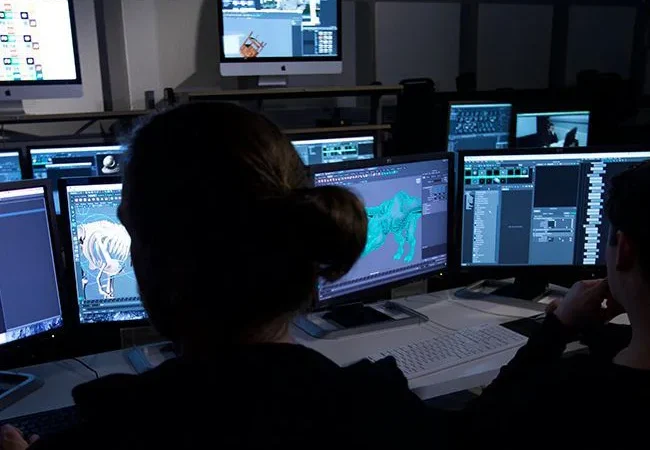
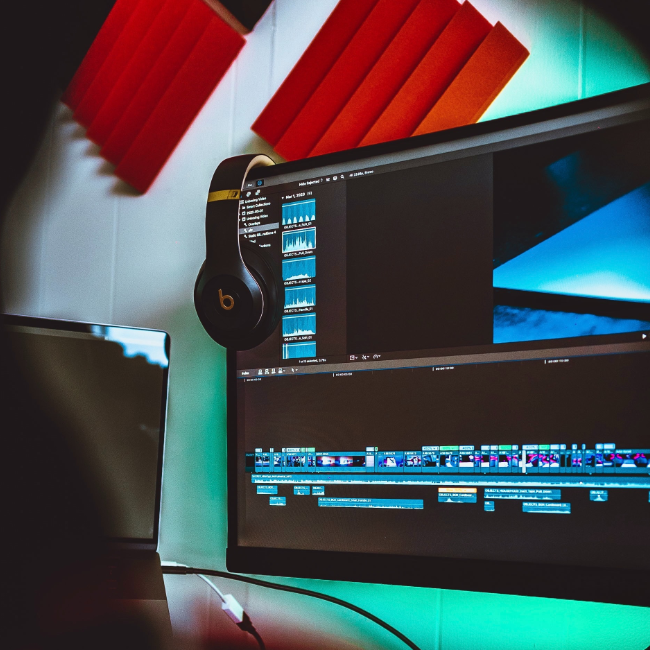
Editing is a modern program for people who want to learn how to create films and contemporary audiovisual works through editing, rhythm, structure, and deliberate narrative decisions. The program combines classic editing techniques with a modern post-production workflow, work with various formats, and the use of AI as a practical tool to support the creative process.
This isn’t just about learning how to use editing software. At AMA, we understand editing as the point at which the footage begins to function as a story. This is where the rhythm, tension, emotion, and ultimate meaning of the project take shape. That is why the program develops not only technical skills but, above all, narrative thinking and decision-making abilities.
Today, modern editors work not only on feature films and commercials, but also on short films, online formats, hybrid projects, and content developed using AI. That is why the program also covers the organization of a modern workflow, preparing content for multiple formats, and the practical use of AI tools in post-production.
Who is it for?
This program is for people who:
- want to grow in the field of editing and post-production,
- are interested in rhythm, narrative, and the structure of a film,
- want to work on film, advertising, and digital content,
- They want to understand how the final form is created from raw material,
- They want to combine traditional editing with modern tools and AI.
This program is for those who want to consciously craft a narrative, rather than just technically assemble footage.
What You’ll Learn
During the course, you’ll learn, among other things:
- developing the structure of a film and short-form works,
- rhythm, tempo, and the dramatic structure of the editing,
- scene analysis and material selection,
- working with visual and audio storytelling,
- organization of footage and the post-production workflow,
- preparing versions for various formats and platforms,
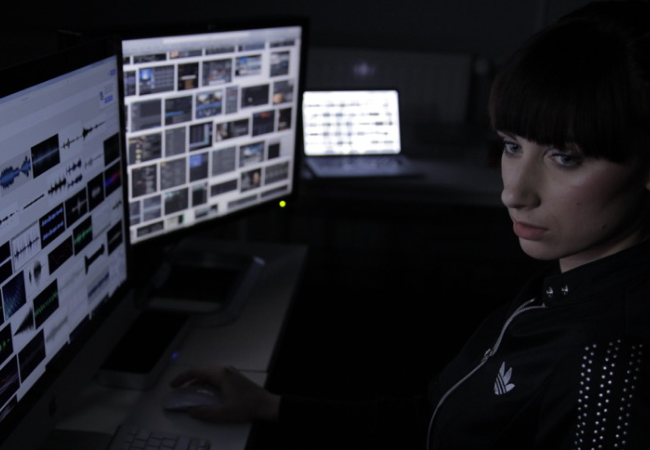
- the use of AI for transcription, organizing footage, selection, subtitles, and support for the editing process.
The most important thing is that you’ll learn to construct a film deliberately—through your choices, structure, and pacing.
What Is Learning Like?
The program is practical and project-based. Students work with real-world material, practice editing scenes, building rhythm, tension, and narrative, and learn to manage the post-production process from start to finish.
The program covers work on dialogue scenes, visual scenes, short-form pieces, hybrid material, and contemporary digital formats. Another important element of the program is learning to use AI as a tool that speeds up and organizes work, but does not replace the editor’s decisions.
Educational Model
Mode: Daytime
Duration: 1 year
Input:
- in the Visual Storytelling program,
, or - For people with prior experience who want to advance their careers in modern editing and post-production.
Learning Outcome
Upon completing the program, students will be able to edit film and digital footage with a clear sense of purpose, understand the structure, rhythm, and dramatic elements of editing, work within a modern post-production workflow, and use AI to support the creative process. This program is for those who want to shape the final form of a film from the inside out.
Editing Degree
To complete the course and earn a diploma, students must submit a graduation film, which is screened for an audience during an open exam, and pass a theoretical exam. Students who pass receive an AMA FILM ACADEMY Diploma.
A program supported by the Polish Film Institute

Related courses
AMA Future Filmmaking Lab
A year-long weekend program on AI, new technologies, and project-based work in film.
Image Post-Production + AI
A course on compositing, visual effects, AI, and the final film image.

Cinematography + AI
A program focusing on cinematography, camera work, lighting, and contemporary camera operator workflows.

Visual Storytelling
A program focused on image design, visual storytelling, and thoughtful audiovisual form.

Film Directing + AI
A program focusing on cinematography, working with a crew, and modern production processes.
Editing (narrative editing)
A course on narrative editing, film rhythm, post-production, and working with AI.
Course curriculum
Registration Guide
Registration begins on: April 15 , 2026
Recruitment begins on: May 5 , 2026
Course start date: October 13, 2026; end date: June 30, 2027
Exam fee: 250 PLN
Accident Insurance: 70 PLN
Entry fee: 1,900 PLN
Tuition: 6,900 PLN per semester / 13,800 PLN per year
Payable per semester in advance by October 1 and February 15 of each year
or in monthly installments due by the 5th of each month:
October–June: 1,360 PLN
July–September: 1,000 PLN
» We have prepared special terms for those who are committed to growing their careers at AMA.
Candidates who are accepted and sign a student contract by the end of June 2026 will receive a 30% discount on their final semester—as support during the final stage of their education.
Practice
The course will cover the following practical topics:
- p]:pt-0 [&>p]:mb-2 [&>p]:my-0″>
Editing a narrative scene—including dialogue and action—from multi-shot footage
- p]:pt-0 [&>p]:mb-2 [&>p]:my-0″>
selection and evaluation of footage — analysis of takes, compiling a shortlist
- p]:pt-0 [&>p]:mb-2 [&>p]:my-0″>
documentary editing — building a narrative structure from unstructured footage
- p]:pt-0 [&>p]:mb-2 [&>p]:my-0″>
Working with an interview — selecting statements, pacing the information, and telling a story through conversation
- p]:pt-0 [&>p]:mb-2 [&>p]:my-0″>
Ad editing — message and emotion in short-form formats
- p]:pt-0 [&>p]:mb-2 [&>p]:my-0″>
music video editing — synchronizing the visuals with the music, visual rhythm
- p]:pt-0 [&>p]:mb-2 [&>p]:my-0″>
Editing a trailer and a short film — concise storytelling and the structure of a short film
- p]:pt-0 [&>p]:mb-2 [&>p]:my-0″>
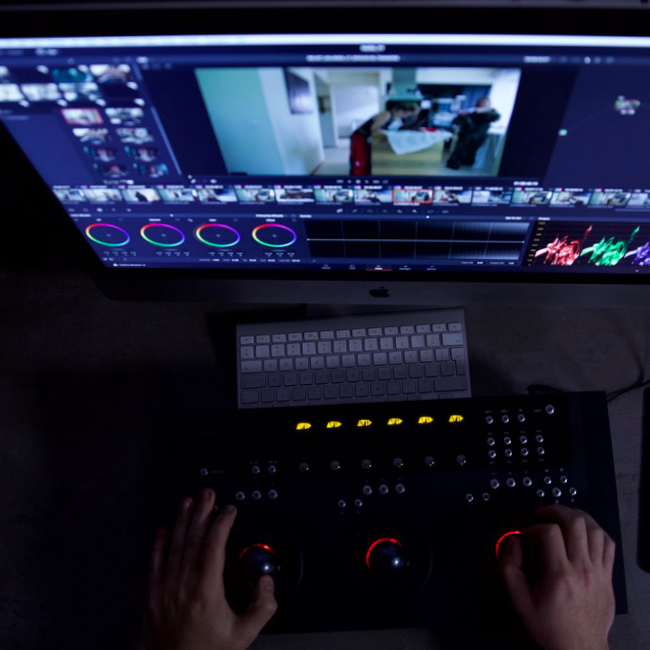
color correction and color grading — from matching shots to establishing a project’s visual style
- p]:pt-0 [&>p]:mb-2 [&>p]:my-0″>
Look development — designing a consistent aesthetic using LUTs and shaping tools
- p]:pt-0 [&>p]:mb-2 [&>p]:my-0″>
dialogue editing — synchronization, cleanup, working with imperfect footage
- p]:pt-0 [&>p]:mb-2 [&>p]:my-0″>
Narrative sound design — building a soundscape as an element of the story
- p]:pt-0 [&>p]:mb-2 [&>p]:my-0″>
Organization of footage and post-production workflow — data structure, conform, versioning
- p]:pt-0 [&>p]:mb-2 [&>p]:my-0″>
Preparation of deliverables — output formats for cinema, television, and digital platforms
- p]:pt-0 [&>p]:mb-2 [&>p]:my-0″>
AI in Transcription and Content Selection — Automatic Speech Recognition and Shot Tagging
- p]:pt-0 [&>p]:mb-2 [&>p]:my-0″>
AI in Subtitle and Translation Generation — Workflow for Multilingual Formats
- p]:pt-0 [&>p]:mb-2 [&>p]:my-0″>
AI in Color Correction — Automatic Color Matching and Critical Verification
- p]:pt-0 [&>p]:mb-2 [&>p]:my-0″>
Integration of generative video with filmed footage — visual consistency in a hybrid image
- p]:pt-0 [&>p]:mb-2 [&>p]:my-0″>
Creating hybrid shots — a classic shot combined with generative elements
- p]:pt-0 [&>p]:mb-2 [&>p]:my-0″>
Creating an editing showreel — selecting work and showcasing your skills
- p]:pt-0 [&>p]:mb-2 [&>p]:my-0″>
thesis project — independent production of a film, from concept to completion and defense
Theory
The course will cover the following theoretical topics:
- p]:pt-0 [&>p]:mb-2 [&>p]:my-0″>
cinematic language — the grammar of the image, types of cuts, continuity, and the axis of action as the foundations of editing decisions
- p]:pt-0 [&>p]:mb-2 [&>p]:my-0″>
Theory of Film Editing — Rhythm, Structure, Dramatic Tension, and the Narrative Function of Cuts
- p]:pt-0 [&>p]:mb-2 [&>p]:my-0″>
The History of Film Editing and Cinema — From the Soviet School Through Classic Hollywood to Contemporary Hybrid Forms
- p]:pt-0 [&>p]:mb-2 [&>p]:my-0″>
color theory — color spaces, color temperature, and their application in color correction and grading
- p]:pt-0 [&>p]:mb-2 [&>p]:my-0″>
Dramaturgy and Film Narrative — Story Structure, Character Development, Emotion as the Goal of Editing
- p]:pt-0 [&>p]:mb-2 [&>p]:my-0″>
Post-production pipeline — stages, roles, and the flow of material between production departments
- p]:pt-0 [&>p]:mb-2 [&>p]:my-0″>
AI Ethics in Film Editing — Copyright, Attribution, Creative Responsibility, and the Future of the Profession
- p]:pt-0 [&>p]:mb-2 [&>p]:my-0″>
Digital workflow and data management — backup, versioning, conforming, and preparation for distribution
- p]:pt-0 [&>p]:mb-2 [&>p]:my-0″>
Assembly shop management — organizing work, communicating with the production manager and other departments, working under time pressure
Faculty Members of the Program
- Jarosław Barzan
- Wojciech Słota
- Piotr Paruch
- Kajetan Czarnecki
- Przemysław Mastela
- Jarosław Migoń
- Krystian Łochowski
- Michał Kowalski
- Konrad Zięcina
- Piotr Zdybał
- Maciej Gil
Admission Requirements
To apply for admission to the Editing program , applicants must take an entrance exam in the form of an interview and submit, in advance, samples of their work in film, photography, or the visual arts that demonstrate their aptitude.
We schedule interview dates with participants on an individual basis.
Please send your resume and portfolio to the following email address: rekrutacja@amafilmacademy.pl
» We have prepared special terms for those who are committed to growing their careers at AMA.
Candidates who are accepted and sign a student contract by the end of June 2026 will receive a 30% discount on their final semester—as support during the final stage of their education.
Registration Guide
Registration begins on: April 15 , 2026
Recruitment begins on: May 5 , 2026
Course start date: October 13, 2026; end date: June 30, 2027
Exam fee: 250 PLN
Accident Insurance: 70 PLN
Entry fee: 1,900 PLN
Tuition: 6,900 PLN per semester / 13,800 PLN per year
Payable per semester in advance by October 1 and February 15 of each year
or in monthly installments due by the 5th of each month:
October–June: 1,360 PLN
July–September: 1,000 PLN
» We have prepared special terms for those who are committed to growing their careers at AMA.
Candidates who are accepted and sign a student contract by the end of June 2026 will receive a 30% discount on their final semester—as support during the final stage of their education.
Practice
The course will cover the following practical topics:
- p]:pt-0 [&>p]:mb-2 [&>p]:my-0″>
Editing a narrative scene—including dialogue and action—from multi-shot footage
- p]:pt-0 [&>p]:mb-2 [&>p]:my-0″>
selection and evaluation of footage — analysis of takes, compiling a shortlist
- p]:pt-0 [&>p]:mb-2 [&>p]:my-0″>
documentary editing — building a narrative structure from unstructured footage
- p]:pt-0 [&>p]:mb-2 [&>p]:my-0″>
Working with an interview — selecting statements, pacing the information, and telling a story through conversation
- p]:pt-0 [&>p]:mb-2 [&>p]:my-0″>
Ad editing — message and emotion in short-form formats
- p]:pt-0 [&>p]:mb-2 [&>p]:my-0″>
music video editing — synchronizing the visuals with the music, visual rhythm
- p]:pt-0 [&>p]:mb-2 [&>p]:my-0″>
Editing a trailer and a short film — concise storytelling and the structure of a short film
- p]:pt-0 [&>p]:mb-2 [&>p]:my-0″>
color correction and color grading — from matching shots to establishing a project’s visual style
- p]:pt-0 [&>p]:mb-2 [&>p]:my-0″>
Look development — designing a consistent aesthetic using LUTs and shaping tools
- p]:pt-0 [&>p]:mb-2 [&>p]:my-0″>
dialogue editing — synchronization, cleanup, working with imperfect footage
- p]:pt-0 [&>p]:mb-2 [&>p]:my-0″>
Narrative sound design — building a soundscape as an element of the story
- p]:pt-0 [&>p]:mb-2 [&>p]:my-0″>
Organization of footage and post-production workflow — data structure, conform, versioning
- p]:pt-0 [&>p]:mb-2 [&>p]:my-0″>
Preparation of deliverables — output formats for cinema, television, and digital platforms
- p]:pt-0 [&>p]:mb-2 [&>p]:my-0″>
AI in Transcription and Content Selection — Automatic Speech Recognition and Shot Tagging
- p]:pt-0 [&>p]:mb-2 [&>p]:my-0″>
AI in Subtitle and Translation Generation — Workflow for Multilingual Formats
- p]:pt-0 [&>p]:mb-2 [&>p]:my-0″>
AI in Color Correction — Automatic Color Matching and Critical Verification
- p]:pt-0 [&>p]:mb-2 [&>p]:my-0″>
Integration of generative video with filmed footage — visual consistency in a hybrid image
- p]:pt-0 [&>p]:mb-2 [&>p]:my-0″>
Creating hybrid shots — a classic shot combined with generative elements
- p]:pt-0 [&>p]:mb-2 [&>p]:my-0″>
Creating an editing showreel — selecting work and showcasing your skills
- p]:pt-0 [&>p]:mb-2 [&>p]:my-0″>
thesis project — independent production of a film, from concept to completion and defense
Theory
The course will cover the following theoretical topics:
- p]:pt-0 [&>p]:mb-2 [&>p]:my-0″>
cinematic language — the grammar of the image, types of cuts, continuity, and the axis of action as the foundations of editing decisions
- p]:pt-0 [&>p]:mb-2 [&>p]:my-0″>
Theory of Film Editing — Rhythm, Structure, Dramatic Tension, and the Narrative Function of Cuts
- p]:pt-0 [&>p]:mb-2 [&>p]:my-0″>
The History of Film Editing and Cinema — From the Soviet School Through Classic Hollywood to Contemporary Hybrid Forms
- p]:pt-0 [&>p]:mb-2 [&>p]:my-0″>
color theory — color spaces, color temperature, and their application in color correction and grading
- p]:pt-0 [&>p]:mb-2 [&>p]:my-0″>
Dramaturgy and Film Narrative — Story Structure, Character Development, Emotion as the Goal of Editing
- p]:pt-0 [&>p]:mb-2 [&>p]:my-0″>
Post-production pipeline — stages, roles, and the flow of material between production departments
- p]:pt-0 [&>p]:mb-2 [&>p]:my-0″>
AI Ethics in Film Editing — Copyright, Attribution, Creative Responsibility, and the Future of the Profession
- p]:pt-0 [&>p]:mb-2 [&>p]:my-0″>
Digital workflow and data management — backup, versioning, conforming, and preparation for distribution
- p]:pt-0 [&>p]:mb-2 [&>p]:my-0″>
Assembly shop management — organizing work, communicating with the production manager and other departments, working under time pressure
Faculty Members of the Program
- Jarosław Barzan
- Wojciech Słota
- Piotr Paruch
- Kajetan Czarnecki
- Przemysław Mastela
- Jarosław Migoń
- Krystian Łochowski
- Michał Kowalski
- Konrad Zięcina
- Piotr Zdybał
- Maciej Gil
Admission Requirements
To apply for admission to the Editing program , applicants must take an entrance exam in the form of an interview and submit, in advance, samples of their work in film, photography, or the visual arts that demonstrate their aptitude.
We schedule interview dates with participants on an individual basis.
Please send your resume and portfolio to the following email address: rekrutacja@amafilmacademy.pl
» We have prepared special terms for those who are committed to growing their careers at AMA.
Candidates who are accepted and sign a student contract by the end of June 2026 will receive a 30% discount on their final semester—as support during the final stage of their education.

Learn with us. Explore the world of film!
Get inspired by film and learn from the best. Gain a modern profession and work professionally in the film industry. Check the current enrolment.
Enrol at AMA